North Shore Borer Pest Control

The North Shore of Auckland is famous for its stunning coastal views and charming character homes. From the historic villas of Devonport to the classic bungalows of Takapuna, these properties represent some of the most sought-after real estate in the country. However, the very materials that give these homes their heritage character also make them highly vulnerable to a hidden, structural threat.
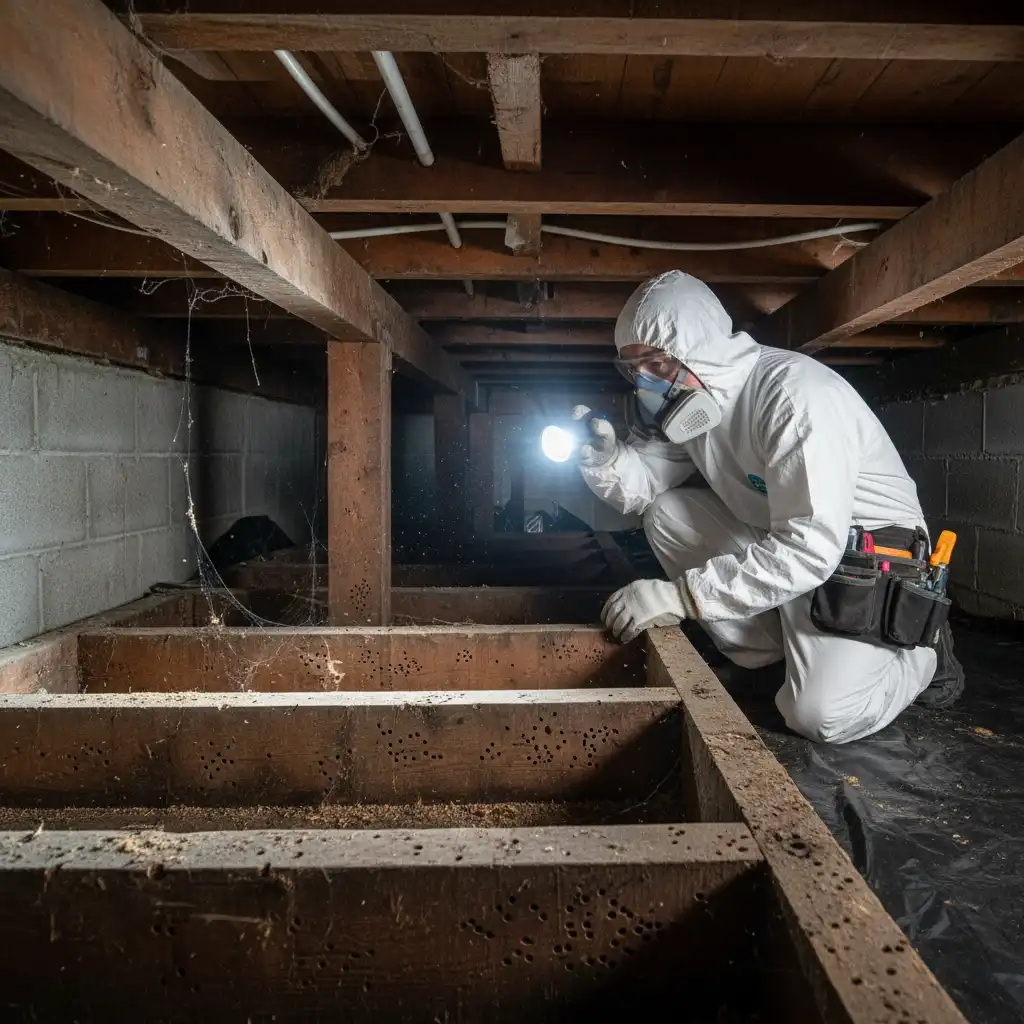
Untreated native timbers, such as Rimu, Matai, and Tawa, were standard building materials in New Zealand prior to the 1960s. Today, these aging timbers act as a magnet for the Common House Borer (Anobium punctatum). Left unchecked, this destructive pest can quietly hollow out your floorboards, subfloor joists, and exterior weatherboards.

Protecting your property requires specialized knowledge and highly localized strategies. Investing in professional north shore borer pest control is the most reliable way to safeguard your home’s structural integrity. Let’s explore why these coastal properties are at such high risk and how our dedicated treatments can eradicate borer infestations for good.

Key Takeaways

Effective north shore borer pest control requires identifying active flight holes and treating structural native timbers with residual insecticides. Because borer larvae thrive in damp environments, resolving subfloor moisture and ventilation issues is critical to breaking the breeding cycle and protecting Auckland heritage homes.

Dedicated North Shore Borer Pest Control

When you discover small, 2mm flight holes in your floorboards or notice fine, gritty dust (known as frass) accumulating under your home, immediate action is required. Borer larvae spend three to four years tunneling through your timber before they finally emerge as adult beetles. This delayed visibility means that by the time you actually see the exit holes, significant internal damage has already occurred.

Our dedicated north shore borer pest control services are specifically designed to combat the unique environmental challenges of Auckland’s coastal suburbs. We do not just apply a generic surface spray; we target the root cause of the infestation. Our trained technicians conduct comprehensive subfloor inspections to identify active colonies and assess structural moisture levels.

Borer Infestation Risk by House Age in Auckland

We utilize advanced residual insecticides and precise timber injection techniques to penetrate deep into the wood grain. This dual-action approach kills adult beetles as they emerge during flight season and neutralizes the hidden larvae that are eating the timber from the inside. By breaking the borer life cycle entirely, we provide long-lasting protection for your most valuable asset.

Action Check: Pre-Purchase Inspections

If you are buying a historic villa on the North Shore, never skip a specialized timber pest inspection. Standard building reports often miss early-stage borer activity in tight subfloor spaces.

Why North Shore Homes are Prone to Borer

The exceptionally high prevalence of borer on the North Shore is not a coincidence. It is the direct result of a perfect storm involving local climate conditions and historical building practices. Understanding these unique factors is crucial for effective pest management and long-term property prevention.

Historically, New Zealand builders relied heavily on the sapwood of native trees, which is softer and more nutrient-dense than heartwood. While this made construction easier, it provided an abundant food source for wood-boring insects. When combined with Auckland’s specific environmental traits, these homes became prime targets.

Historic Devonport Weatherboard Home

Coastal Humidity and Timber Degradation

The Common House Borer cannot survive in completely dry wood. Borer larvae require timber with a moisture content of at least 10% to 12% to thrive and effectively digest the wood’s cellulose. The North Shore’s maritime climate, characterized by high humidity and frequent rainfall, naturally elevates the moisture levels in older properties.

Furthermore, the clay soils typical of the North Shore retain water heavily, leading to rising damp in subfloor cavities. Many older homes have insufficient foundation ventilation, causing this ground moisture to become trapped beneath the floorboards. This creates a soft, damp timber environment that acts as the perfect incubator for borer larvae.

Research shows that borer larvae develop fastest at relative humidities over 70% and temperatures between 22°C and 23.5°C. Auckland’s spring and summer seasons align perfectly with these conditions, accelerating the rate at which the larvae consume your home’s structural supports.

📝

Note: The Flight Season

The borer flight season in Auckland typically runs from October to March. This is when adult beetles emerge from the timber to mate and lay new eggs, making it a critical time for visible inspections.

Historic Weatherboard Homes in Devonport and Takapuna

Suburbs like Devonport, Northcote, and Takapuna are renowned for their picturesque heritage weatherboard homes. These properties were predominantly constructed using the sapwood of native timbers such as Rimu, Matai, and Kauri. While visually stunning, these untreated softwoods are the preferred diet for the Common House Borer.

Unlike modern homes built with chemically treated Radiata pine, these historic villas have zero natural defense against wood-boring insects. Over decades, repeated borer infestations can severely compromise the load-bearing capacity of floor joists, bearers, and jack-studs. What starts as a minor cosmetic issue can quickly escalate into a catastrophic structural failure.

Replacing native timber is astronomically expensive and diminishes the heritage value of the property. Therefore, preserving the original wood through proactive treatment is always the most cost-effective and historically sensitive approach.

⚠️

Warning: Hidden Structural Damage

Timber may appear completely sound on the surface while being severely weakened internally. Never assume an infestation is ‘historic’ or inactive without professional verification.

Localized Treatment Strategies for the North Shore

Effectively eradicating borer requires much more than generic pest control methods. It demands a localized approach tailored to the specific construction styles and environmental conditions of the North Shore. Our comprehensive borer pest control on the North Shore combines chemical eradication with vital environmental modifications.

Borer Flight Holes in Native Timber

Moisture Control and Ventilation Solutions

Because borer larvae depend entirely on moisture to digest wood, reducing the humidity in your subfloor is the first line of defense. We conduct comprehensive moisture readings of your structural timbers to identify high-risk damp zones. If the timber moisture content exceeds 12%, chemical treatments alone will not provide a permanent fix.

We frequently recommend installing heavy-duty polythene vapor barriers over the damp clay soil beneath your home. This simple yet highly effective measure prevents ground moisture from evaporating upward into the subfloor cavity. By cutting off the moisture source, the timber slowly dries out, making it inhospitable to borer larvae.

Additionally, clearing blocked air vents and installing active subfloor ventilation systems can drastically lower ambient humidity. Proper airflow ensures that even during wet Auckland winters, your foundation timbers remain dry and structurally sound.

💡

Tip: Check Your Downpipes

Ensure all exterior gutters and downpipes direct rainwater well away from the base of your house. Water pooling near the foundation is a leading cause of subfloor dampness.

Targeted Timber Injections

For structural timbers that are already heavily infested, topical surface sprays may not penetrate deeply enough to reach the larvae hidden inside. In these severe cases, we employ targeted timber injections. This highly specialized technique involves injecting a residual pyrethroid insecticide directly into the existing flight holes under high pressure.

This method forces the liquid insecticide deep into the complex, labyrinth-like network of larval tunnels inside the wood. It effectively neutralizes the current generation of eating larvae and leaves a toxic barrier that kills any adults attempting to lay new eggs. Timber injection is particularly crucial for preserving expensive native timber flooring.

For general protection, we also apply boron-based surface treatments to all exposed subfloor framing. Boron is a naturally occurring mineral that diffuses into damp wood, acting as a long-term insecticide and fungicide that does not break down over time.

Treatment Method Penetration Depth Effectiveness on Larvae Longevity
DIY Borer Bombs (Aerosol) Surface only Zero (Only kills flying adults) Days to Weeks
Professional Residual Spray Moderate (Absorbs into sapwood) High (Kills upon emergence/eating) 10+ Years
Targeted Timber Injection Deep (Fills internal tunnels) Maximum (Direct contact) Life of the timber

Client Testimonials from North Shore Residents

Our steadfast commitment to protecting local homes has earned us the trust of countless residents across the North Shore. We understand the immense stress and anxiety that comes with discovering a borer infestation in your cherished character property. Our team prides itself on delivering transparent, highly effective, and guaranteed results.

Subfloor Pest Inspection Auckland

“We were absolutely devastated when we found fresh borer dust under our 1920s Devonport villa,” says Sarah M. “The team provided a thorough inspection and explained the entire lifecycle of the pest. Their targeted north shore borer pest control treatment saved our original Rimu floors from needing replacement. We couldn’t be happier with their professionalism.”

Mark T. from Takapuna shares a similar experience: “After noticing flight holes in our weatherboards, we tried DIY borer bombs from the hardware store, but the problem kept returning every summer. Bringing in the experts was the best decision we made. They addressed our subfloor dampness and injected the affected timber. The borer activity has completely stopped.”

Contact Our North Shore Borer Team

Do not wait until your floorboards start to sag or your exterior weatherboards begin to crumble. Early detection and professional intervention are the absolute keys to saving your home from irreversible borer damage. Our local experts are ready to protect your property during the high-risk flight season and beyond.

We offer comprehensive pre-purchase borer inspections, targeted eradication treatments, and long-term moisture control solutions. Every single treatment plan is customized to the unique architectural needs of your home and backed by our robust service warranties. We exclusively use industry-leading, EPA-approved products that are tough on pests but safe for your family and pets.

Subfloor Ventilation System Installation

Contact our dedicated team today to schedule your comprehensive timber inspection. Let us provide you with the ultimate peace of mind that comes with reliable, expert borer pest control on the North Shore. Protect your heritage home and secure your financial investment for generations to come.

People Also Ask

What is the best time of year to treat for borer?
The most effective time to treat for borer is just before or during their flight season, which runs from October to March in New Zealand. Treating during this window ensures that adult beetles are killed as they emerge from the timber, preventing them from mating and laying new eggs. However, deep timber injections and moisture control measures can be implemented at any time of the year.
How do I know if the borer infestation is active?
The clearest sign of an active borer infestation is the presence of fresh, clean-cut flight holes (about 1-2mm in diameter) and small piles of fine, gritty dust called frass beneath the holes. If the dust appears light in color and feels like fine sand, larvae are actively consuming the wood. Older, inactive holes will often look dark inside and will not produce new dust.
Are borer bombs effective for treating my home?
DIY borer bombs (aerosol foggers) are generally ineffective for long-term eradication. They only release insecticide into the air, which may kill adult beetles currently flying in the room. However, the fog does not penetrate the timber where the larvae live and feed for up to four years. Professional residual sprays and timber injections are required to reach the root of the problem.
How much does borer treatment cost in Auckland?
The cost of borer treatment varies widely depending on the size of the home, the severity of the infestation, and subfloor accessibility. A standard subfloor residual spray might range from $400 to $800, whereas comprehensive treatments involving timber injection, moisture barriers, and ventilation upgrades for large heritage homes can cost several thousand dollars. A professional inspection is required for an accurate quote.
Can borer completely destroy my house?
Yes, if left untreated for decades, borer can cause catastrophic structural failure. The larvae systematically eat the cellulose within the timber, creating a honeycomb-like network of tunnels. Over time, this drastically reduces the load-bearing capacity of floor joists, bearers, and weatherboards, eventually requiring complete replacement of the structural framing.
Is borer treatment safe for my pets?
Modern professional borer treatments use EPA-approved products that are safe for households with pets when applied correctly. Technicians typically require humans and pets to vacate the premises during the application and for a few hours afterward until the treatment has completely dried. Once dry, the residual chemicals bind to the timber and pose minimal risk to mammals.

Leave a Comment

Your email address will not be published. Required fields are marked *

Scroll to Top