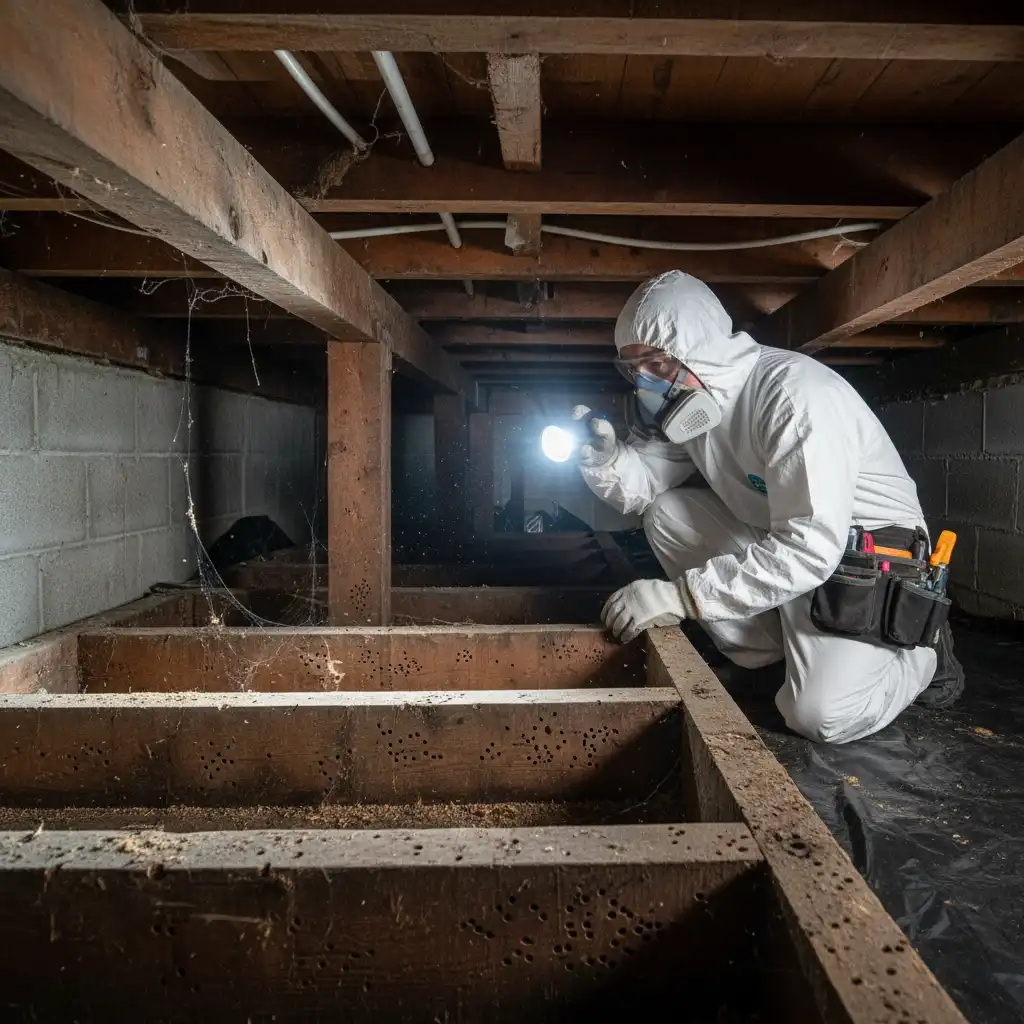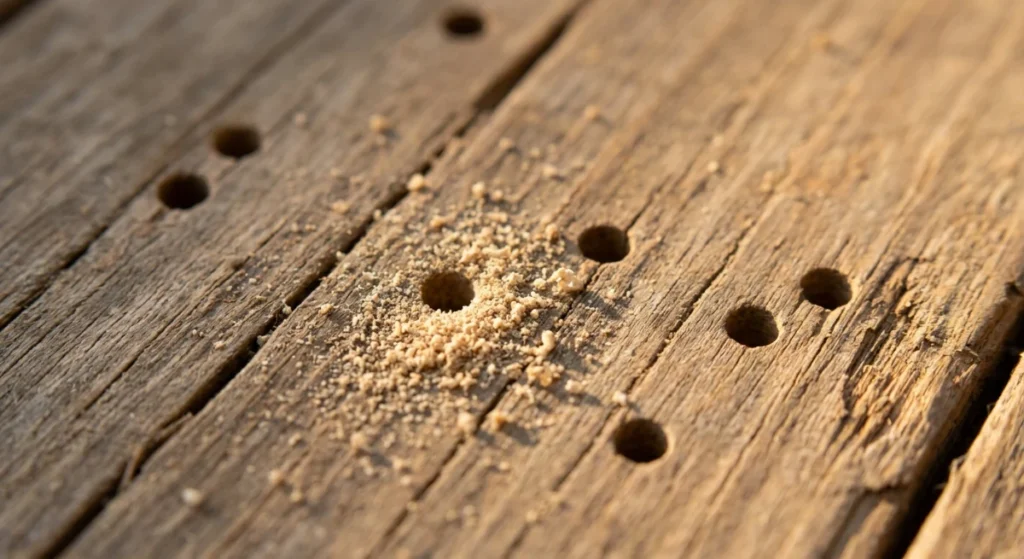
You walk into the hallway of your classic Auckland villa and spot a tiny, cone-shaped pile of pale dust on the skirting board. You wipe it away, thinking nothing of it. A week later, the dust is back, sitting directly beneath a cluster of 2mm holes.
That is the Anobium punctatum beetle chewing through your equity. By the time you see the dust—known as frass—the larvae have likely been hollowing out your floorboards for up to five years. It is a quiet, systematic destruction.
The era of grabbing a cheap bug bomb from the hardware store and hoping for the best is over. Those surface sprays do not penetrate the timber where the actual damage is happening. You need a structural solution.
This guide strips away the marketing fluff. We will look at how these insects operate, what the law requires for safe eradication, and exactly what to look for when you hire a Borer Treatment Auckland specialist.
Key Takeaways
To effectively eradicate wood-boring insects, you must target the larvae deep within the timber. DIY bombs only kill adult beetles. Always hire a borer treatment specialist in Auckland who is Level 3 UPM certified, uses EPA-approved residual treatments, and addresses sub-floor moisture to prevent re-infestation.
The Silent Destroyer: Why Auckland Homes Are at Risk
Auckland’s older housing stock is beautiful. Bungalows and villas built before the 1960s heavily feature native timbers like Rimu and Matai. While stunning, the untreated sapwood in these homes is an all-you-can-eat buffet for the Common House Borer.
These insects thrive in damp, poorly ventilated spaces. Given our humid maritime climate and the stagnant air trapped under many older homes, the conditions are perfect for an infestation.
West Auckland properties are particularly vulnerable. The combination of dense, bush-clad sections and older timber framing creates the ideal breeding ground for both the Common House Borer and the larger Two-toothed Longhorn borer.
The Lifecycle of Anobium Punctatum
The adult beetles only live for a few weeks. They emerge between October and March—the New Zealand flight season—solely to mate and lay eggs on bare timber.
Once those eggs hatch, the real trouble begins. The larvae burrow into the wood, where they will spend the next two to five years eating the cellulose.
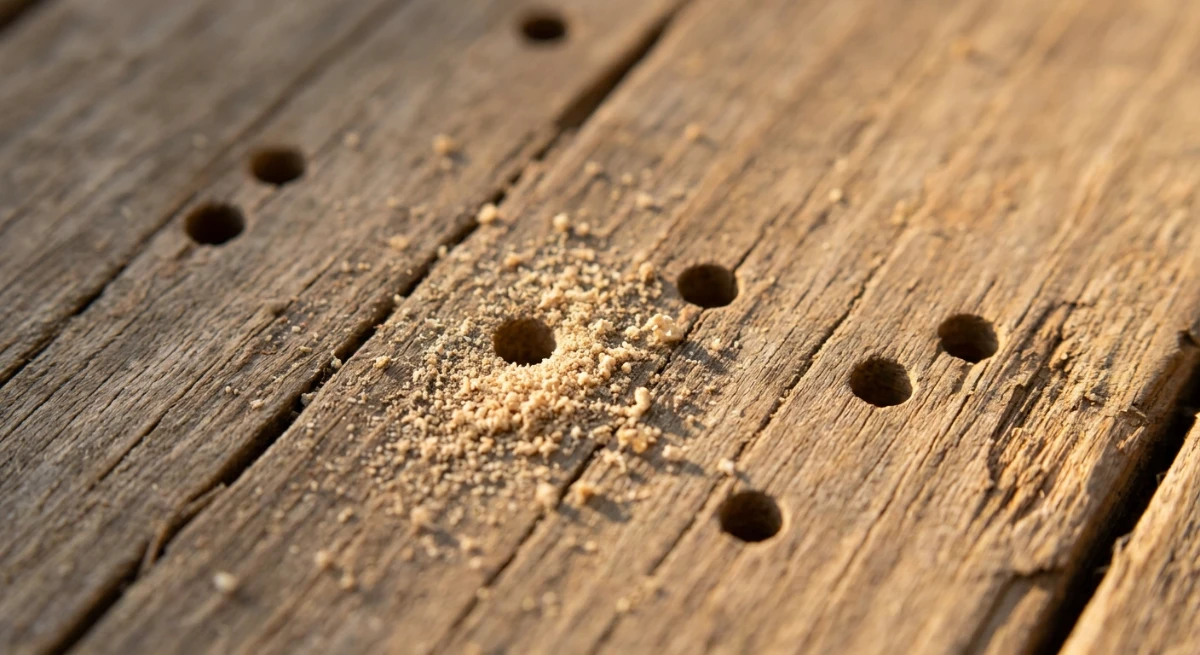
They do not stop until they pupate and chew their way out. That is when you finally see the 2mm flight holes and the gritty frass on your floors.
Borer generally do not eat the hard, resinous heartwood. They specifically target the softer sapwood on the edges of your floorboards and joists, which structurally weakens the timber over time.
Borer vs. Termites: Knowing the Difference
People often panic and assume they have termites. While New Zealand does have native drywood termites, they are incredibly rare compared to the Common House Borer.
Termites hollow out the wood completely, leaving a paper-thin veneer. They also leave distinct, hard fecal pellets. Borer, on the other hand, leave a gritty, cream-colored dust.
Both are destructive, but the treatment protocols are entirely different. A qualified technician will identify the exact species before mixing a single drop of chemical.
The Real Cost of Delaying Treatment
Ignoring a borer problem is structurally dangerous. The larvae tunnel in a complex network, completely hollowing out the internal grain while leaving the surface looking relatively intact.
By the time floorboards start feeling spongy or door frames begin to sag, the timber is mathematically compromised. At that point, pest control is no longer enough; you need a builder.
When you hire a borer treatment specialist in Auckland, you are paying for structural preservation. A professional treatment costs a fraction of what you will pay to re-pile a house or replace native floorboards.
The financial math is brutal. A targeted chemical application might cost you a few hundred dollars. Replacing a compromised sub-floor will easily run into the tens of thousands.
What to Look for When You Hire a Borer Treatment Specialist in Auckland
The pest control industry in New Zealand is shifting. As we approach the FAOPMA Pest Summit 2026 in Auckland, the focus is entirely on predictive, science-backed Integrated Pest Management.
The days of spray and pray are dead. You need a technician who understands entomology, structural moisture, and the law.
Level 3 UPM Certification and HSNO Compliance
Applying industrial-grade residual insecticides requires serious training. In New Zealand, operators handling Class 9 ecotoxic substances must be qualified under the EPA’s Hazardous Substances and New Organisms (HSNO) Act 1996.
This is not a suggestion; it is the law. The Environmental Protection Authority (EPA) strictly regulates who can apply these deep-penetrating chemicals to ensure public and environmental safety.
Before you hire a borer treatment specialist in Auckland, ask to see their New Zealand Certificate in Pest Operations (Level 3). If they do not have it, they are not legally qualified to handle the chemicals required to protect your home.