Got roaches in your kitchen? We will find exactly where they are nesting, bait the colony, and wipe them out completely. No useless surface sprays, no corporate runaround—just total, root-cause eradication. Flicking on the kitchen light at 2 AM and seeing a scatter of brown shapes across the bench is a gut-sinking feeling. It is also a problem that does not fix itself.
Most people panic, head to the hardware store, and buy a bug bomb. That is the worst thing you can do. Kitchen roach infestations require a clinical, scientific approach, not a blanket of toxic fog. We are going to walk you through exactly what is happening in your walls, why those supermarket sprays are failing, and how we actually solve the problem.
Key Takeaways
To eradicate kitchen roach infestations, you must target the nest directly. We use MPI-approved, non-repellent gel baits that cockroaches carry back to their colony, creating a deadly domino effect. Ditch the hardware store bug bombs—they only push the infestation deeper into your home’s structural voids.
Why West Auckland Kitchens Are Prime Real Estate
West Auckland has a unique microclimate. The dampness rolling off the Waitakere Ranges, combined with the older housing stock in areas like Te Atatu and Henderson, creates the perfect breeding ground for pests. Roaches need three things to thrive: warmth, moisture, and a food source.
Your kitchen provides all three in abundance. The motor behind your fridge, the condensation under your sink, and the microscopic crumbs behind the oven are a five-star resort for insects. Following the incredibly mild winter we had last year, the autumn 2026 pest surge has been aggressive.
As the data shows, callouts for kitchen roach infestations have nearly doubled over the last two years. This is not a problem you can ignore. Left unchecked, a minor sighting can explode into a massive structural infestation within weeks.
With Auckland hosting the FAOPMA Pest Summit in July 2026, the industry focus has heavily shifted toward Predictive Integrated Pest Management (IPM). We are moving away from reactive spraying and focusing entirely on smart, preventative exclusion.
Identifying the Enemy: German vs. Gisborne Roaches
Not all cockroaches are created equal. Treating a kitchen requires knowing exactly what species has moved in. The two main culprits we see in Auckland are the German Cockroach and the Gisborne Cockroach.
The German Cockroach: The Indoor Nightmare
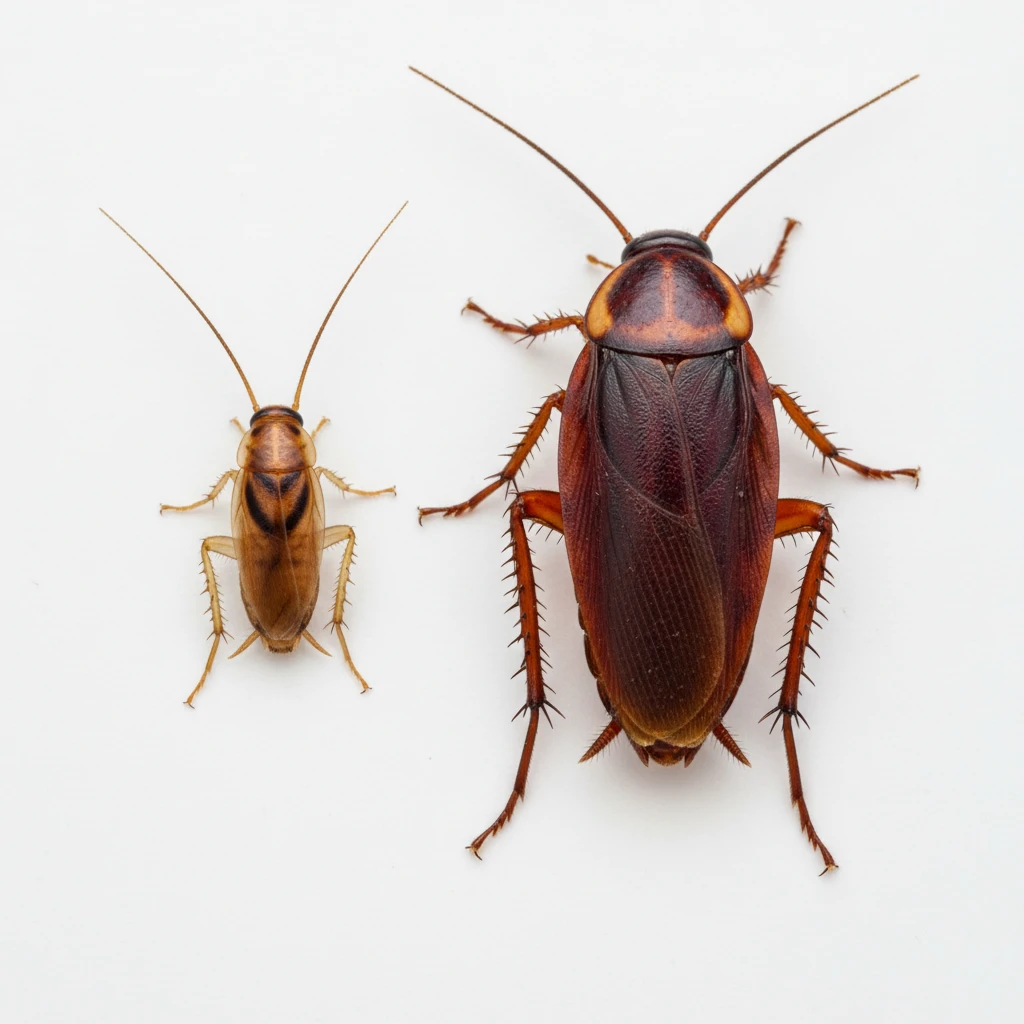
If you see a small, light-brown roach with two dark stripes on its back scurrying across your bench, you have a German Cockroach problem. These are strictly indoor pests. They do not wander in from the garden; they are brought in via cardboard boxes, second-hand appliances, or grocery bags.
They are prolific breeders. A single female carries an egg capsule (ootheca) containing up to 40 eggs. Within a few months, one pregnant female can spawn an infestation of thousands. They love the heat of dishwasher motors, espresso machines, and microwave circuitry.
The Gisborne Cockroach: The Accidental Invader
Gisborne cockroaches are larger, darker, and flatter. They typically live outside in bark, woodpiles, and leaf litter. When the heavy Auckland autumn rains hit, they seek higher, drier ground, often ending up inside your home by mistake.
While they look intimidating, they are actually much easier to manage. They do not breed inside your kitchen appliances like their German cousins. Sealing entry points and clearing perimeter debris usually solves a Gisborne issue.
The DIY Cycle of Despair
When people spot a roach, their first instinct is to buy a supermarket bug bomb or a can of surface spray. We call this the “DIY Cycle of Despair.” These products are highly repellent. When you set off a bug bomb, the chemical fog rarely penetrates the deep wall voids where the nest actually is.
Instead, the repellent nature of the spray forces the cockroaches to scatter. They retreat deeper into your home’s structural cavities, into adjacent rooms, or up into the ceiling. You might see a few dead bugs on the floor and think you have won, but the colony is simply regrouping.
Never use aerosol bug bombs for German cockroaches. Not only are they ineffective at reaching the nest, but they coat your food preparation surfaces in toxic residue. They complicate professional treatments by making the roaches avoid the areas where we need to place our baits.
Furthermore, constantly exposing the colony to low doses of DIY chemicals can lead to pesticide resistance. By the time you finally call a professional, the kitchen roach infestation is ten times harder to eradicate.
How We Actually Eradicate Kitchen Roaches
At Pest Control Auckland, we do not “spray and pray.” We use a targeted, scientific approach based on Integrated Pest Management (IPM). As Level 3 Qualified UPM Contractors, we have access to Class 9 ecotoxic substances that are strictly regulated and highly effective.
Step 1: Deep Inspection and Gel Baiting
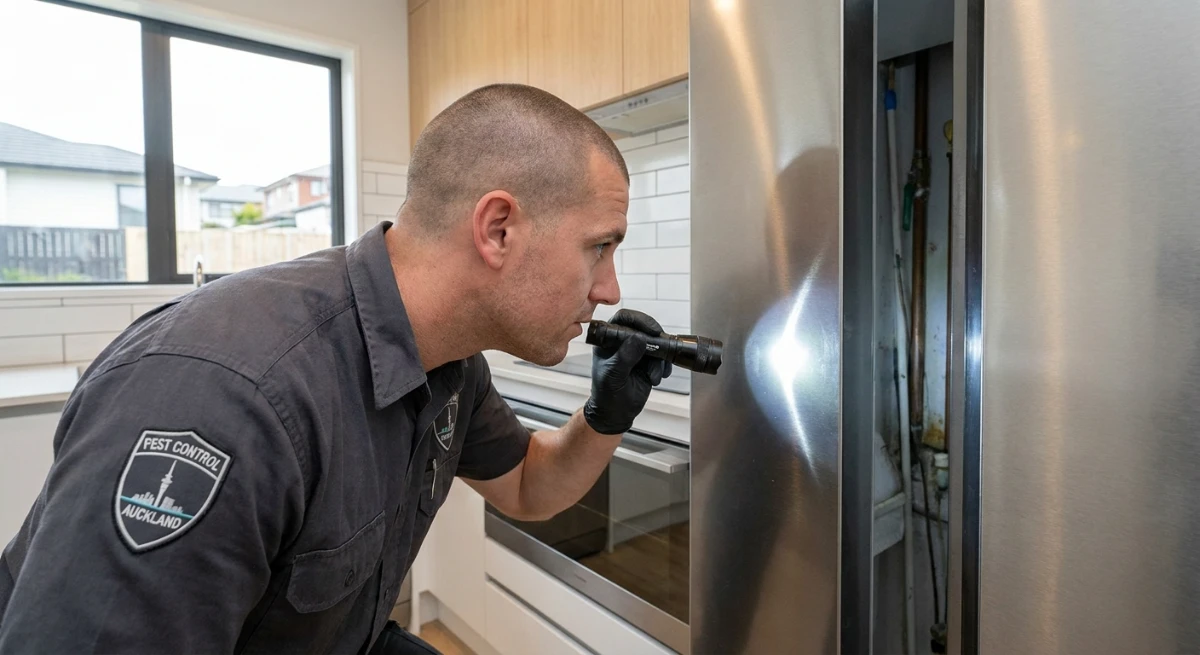
First, we find the nest. We look for frass (roach droppings that look like black pepper), shed skins, and egg casings. Once we locate the hotspots—usually behind the fridge, under the sink, or in the dishwasher housing—we apply professional-grade, non-repellent gel baits.
These baits are the ultimate silver bullet. The cockroaches do not realize it is poison. They eat the bait, return to the nest, and die. Because cockroaches are cannibalistic, the other roaches eat the dead one and also die. This creates a cascading domino effect that wipes out the entire colony from the inside out.
Step 2: Structural Exclusion
Killing the current invaders is only half the job. If you do not close the door, more will walk right in. We identify the structural entry points—gaps around plumbing pipes, cracked skirting boards, and compromised weather stripping.
We advise you on exactly what needs to be sealed. By physically blocking their pathways, we ensure that your kitchen remains a fortress against future invasions.
Grab a tube of silicone sealant and check the pipes under your kitchen sink. If there is a gap between the pipe and the wall, seal it. This is the number one superhighway for pests entering your kitchen.
Commercial Kitchens & The Food Act 2014
If you run a cafe, restaurant, or commercial kitchen in Auckland, the stakes are vastly higher. The hospitality sector faces immense pressure to maintain zero-tolerance hygiene standards. A single roach sighting can destroy your reputation and trigger an MPI audit.
Under the Food Act 2014 and HACCP guidelines, you cannot use toxic, broadcast sprays in food preparation areas. This is where our commercial biosecurity compliance auditing comes in. We utilize zero-emission, non-toxic monitoring systems and precision baiting that keeps you entirely compliant.
We provide the comprehensive documentation and logbooks required by health inspectors. You get absolute discretion, rapid response, and the peace of mind that your business is protected by certified professionals.
2026 Pricing: What You Should Expect to Pay
We believe in transparent pricing. No bait-and-switch tactics, no hidden fees. You deserve to know exactly what it costs to reclaim your home. The cost of treating a kitchen roach infestation depends on the severity and the size of the property.
For a standard 3-bedroom home in Auckland, comprehensive cockroach eradication typically ranges from $265 to $325. This includes the initial deep inspection, the application of professional gel baits, and our preventative structural advice.
| Method | Average Cost | Effectiveness | Safety / Compliance |
|---|---|---|---|
| DIY Bug Bombs | $30 – $50 | Very Low (Pushes nest deeper) | High toxic residue on surfaces |
| Budget “Spray” Operators | $150 – $200 | Moderate (Surface kill only) | Often lacks proper Level 3 certs |
| Pest Control Auckland (IPM) | $265 – $325 | Total Eradication (Nest destroyed) | MPI-approved, Child/Pet Safe |
When comparing quotes, always ask if the technician is a Level 3 Qualified UPM Contractor. If they are not, they legally cannot handle the professional-grade products required to actually solve the problem.
Before we arrive, thoroughly clean your kitchen. Wipe down all grease and remove all food crumbs. The cleaner the environment, the faster the roaches will be forced to eat our targeted gel baits instead of your leftovers.
The Silver Bullet Guarantee & Ongoing Prevention
We stand by our work with the “Silver Bullet Guarantee.” If we treat your home for German cockroaches and they return within the warranty period, so do we. But long-term success requires a partnership.
Here is what you need to do to keep them out for good:
- Manage Moisture: Fix leaky taps and ensure your kitchen is well-ventilated. Roaches die without water much faster than they die without food.
- Inspect Deliveries: Check cardboard boxes, especially from grocery deliveries or second-hand appliances, before bringing them inside.
- Nightly Wipe Downs: Never leave dirty dishes in the sink overnight. Wipe down benches and sweep the floor before bed.
For Auckland landlords and property managers, we provide full documentation that satisfies the Tenancy Tribunal. We make it clear that the property has been professionally serviced, protecting your investment and keeping your tenants safe.
Frequently Asked Questions

About the Author: Ronnie
Founder, Pest Control Auckland · Commercial & Residential Pest Expert · Certified Urban Pest Management Specialist.
With years of hands-on experience navigating Auckland’s strict Food Act 2014 compliance, Ronnie is the definitive expert on eradicating complex kitchen roach infestations. Having consulted for top-tier hospitality venues and managed severe residential outbreaks across West Auckland, his scientific, root-cause approach ensures total eradication without compromising family or food safety.