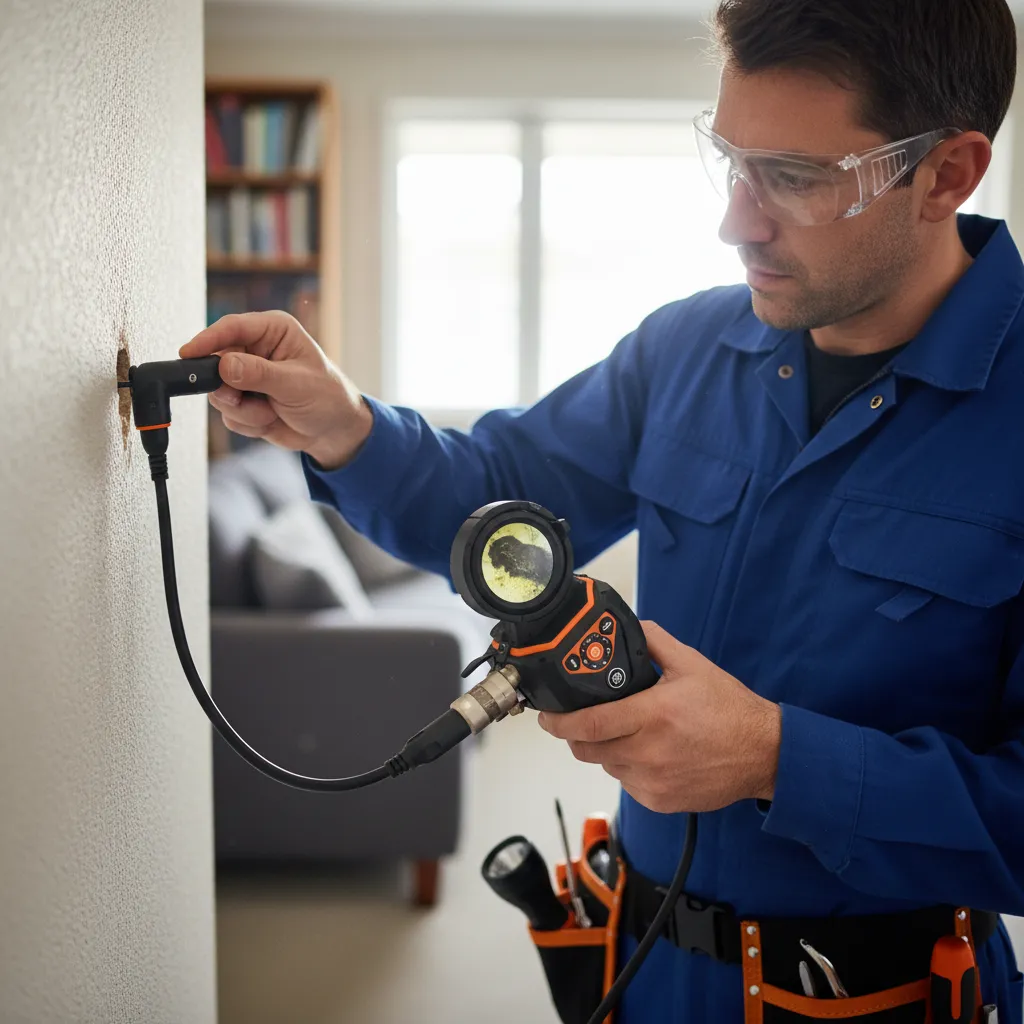
Rats in the roof? We’ll find how they’re getting in, block it, and clear them out — usually in one visit.
When you hear scratching above your ceiling at 2 AM, your house has already become a nesting ground. You do not need to panic, but you do need to act fast before they chew through your wiring.
Auckland’s climate, especially during the autumn temperature drops, drives rodents indoors looking for warmth and food. They bring fleas, diseases, and severe structural damage right into your family’s living space.
We provide Emergency Residential Rat Control in Auckland that actually works. No corporate hedging, no useless hardware store sprays. We use a scientific, entomological approach to identify the entry points, eliminate the current population, and stop them from coming back.
Key Takeaways
For effective emergency rat control in Auckland, you must seal structural entry points first. Hardware store baits often fail and leave dead rats in walls. Professional technicians use MPI-approved, tamper-proof bait stations to safely eradicate the nest, ensuring long-term prevention and compliance with local regulations.
Why the Auckland Rat Surge is Severe Right Now
Auckland is experiencing a massive shift in pest behavior. Following a mild winter and a hot summer last year, the autumn of 2026 has brought a severe rodent surge across the region.
West Auckland, with its proximity to dense bush and older housing stock, is getting hit particularly hard. Rats do not just shelter in your home; they actively destroy it from the inside out.
They chew through electrical wiring, which is a leading cause of unexplained house fires. They also destroy pink batts insulation and spread diseases like Leptospirosis through their urine.
If you ignore the problem, a single pair of rats can produce up to 1,250 descendants in just one year. That is exactly why Emergency Rat Control in Auckland must focus on structural exclusion, rather than just tossing bait in a roof cavity.
The Silent Health Hazards in Your Home
Rats are not just a nuisance; they are a severe public health hazard. As they scurry through your kitchen at night, they leave behind micro-droplets of urine on your benchtops and pantry shelves.
This can transmit dangerous pathogens, including Salmonella, Leptospirosis, and Weil’s disease. In a family home, this puts young children and elderly residents at significant risk of unexplained illnesses.
Furthermore, rats carry ectoparasites like fleas and mites. When the rat dies or leaves the nest, these parasites detach and seek a new host—often your family pets or yourself.
The Data Behind Proper Eradication
We know that proper, targeted intervention works. You only need to look at the recent 2025/2026 Hūnua Ranges operation to see the raw data.
Auckland Council’s highly targeted 1080 drop plummeted rat tracking activity from a staggering 90% down to just 1.3%. While we absolutely do not use aerial drops or 1080 in residential suburbs, the underlying science remains identical.
When you apply the right professional methods, pest populations collapse rapidly. The chart below illustrates the dramatic difference between an uncontrolled environment and a managed one.
The “DIY Cycle of Despair”
Most homeowners try to fix a rat problem themselves first. They buy cheap bait or snap traps from the hardware store, toss them in the roof, and hope for the best.
This almost never works. Rats are incredibly neophobic, meaning they are terrified of new objects in their environment. They will often ignore cheap traps entirely.
If they do eat hardware store bait, it is often a sub-lethal dose. They build a tolerance, and the infestation continues to grow behind your walls.
Worse, if a rat dies inside your wall cavity from cheap bait, the smell will be unbearable for weeks. This inevitably leads to a secondary blowfly infestation in your home.
If you decide to use live-capture cage traps, you are legally required by New Zealand law to physically inspect that trap within 12 hours after sunrise every single day. Failure to do so is a prosecutable offense. Leave it to the professionals.
Why Glue Boards are a Bad Idea
Many people assume they can just buy glue boards to catch rats. What they do not realize is that the sale and use of glue boards for rodents are heavily restricted in New Zealand.
Under the Animal Welfare Act, using certain traps without approval can result in massive fines. The law strictly regulates how animals can be trapped to prevent prolonged suffering.
Even snap traps require precise calibration. If you set a trap incorrectly, it may merely injure the rat, creating a messy, inhumane situation that you now have to deal with manually.
How Professional Rat Eradication Actually Works
We do not just treat the symptom; we fix the root cause. If you do not seal the physical entry points, new rats will simply move in to replace the dead ones.
When we arrive for Emergency Rat Control in Auckland, the first 30 minutes are purely investigative. We do not just start throwing bait around blindly.
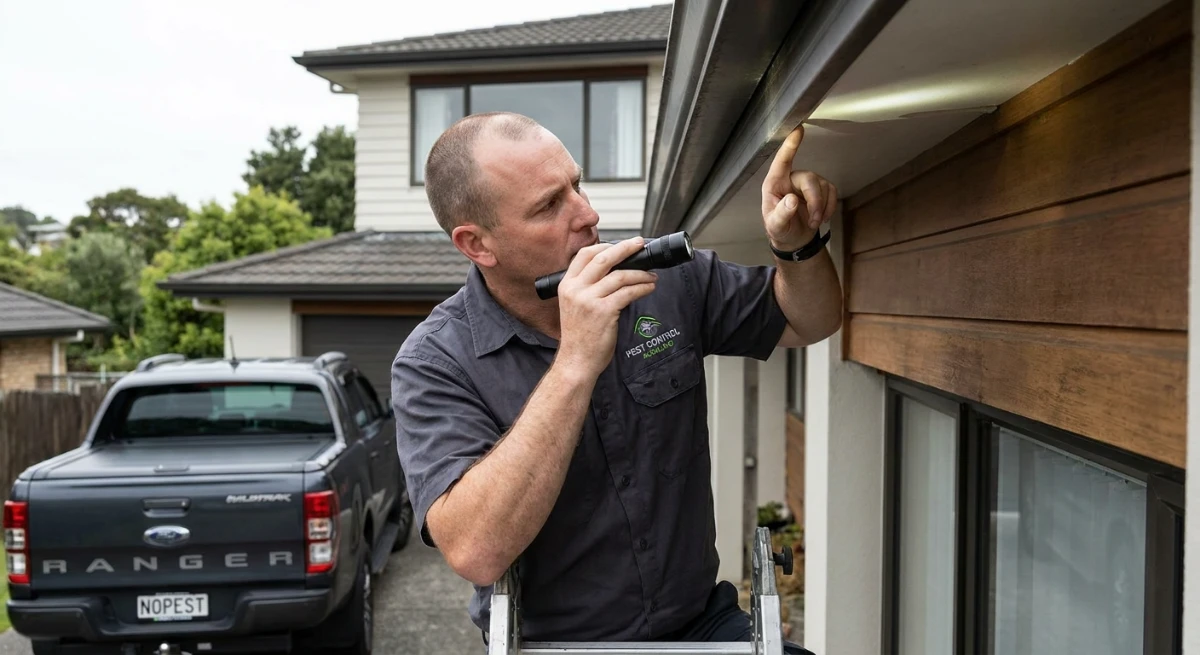
Step 1: Advanced Structural Inspection
Our technicians use high-powered torches and UV lights to track urine trails along your sub-floor and roof joists. We examine the shape and size of the droppings to confirm the exact species of rodent.
We also look for sebum marks. Rats have greasy fur, and as they squeeze through the same small gaps repeatedly, they leave dark, oily smudges on your skirting boards and exterior brickwork.
We identify exactly how the rodents are getting inside your home. We then provide actionable advice or direct mechanical repairs to seal these vulnerabilities permanently.
Step 2: Safe, Targeted Baiting Protocols
Once the house is sealed, we eliminate the trapped population. We use commercial-grade, MPI-approved rodenticides that are strictly controlled.
These are placed inside lockable, tamper-proof bait stations. This ensures that your children and pets absolutely cannot access the treatment.
Under the EPA HPC Notice 2017 and the HSNO Act, operators handling Class 9 ecotoxic substances must be highly qualified. Our technicians hold the New Zealand Certificate in Pest Operations (Level 3), ensuring maximum safety for your family.
Common Signs of a Rat Infestation
Not sure if you have a rat problem? Look out for these undeniable indicators:
- Scratching or scurrying noises in the walls or ceiling at night.
- Small, dark, spindle-shaped droppings in the pantry or behind appliances.
- Greasy smudge marks (sebum) along baseboards and entry holes.
- Gnaw marks on electrical wiring, plastic containers, or wooden beams.
- Unexplained pet behavior, such as dogs staring at blank walls.
Landlords vs. Tenants: Who Pays?
One of the most common questions we get regarding Emergency Rat Control in Auckland is about liability. Under the Residential Tenancies Act, responsibility depends on the root cause of the infestation.
If the house has structural gaps that let rats in, the landlord must pay to fix it. Landlords are legally required to provide a safe, habitable home under the Healthy Homes Standards.
However, if the tenant leaves rubbish piled up against the house or leaves food out, the tenant might foot the bill. The Tenancy Tribunal looks closely at who created the environment that attracted the pests.
| Scenario | Likely Responsible Party | Action Required |
|---|---|---|
|
|