Borer flight holes and frass in New Zealand timber

Hire Borer Treatment Specialist Auckland

Hidden deep within the structural timbers of Auckland’s most beautiful historic homes, a silent destroyer is constantly at work. The Common House Borer thrives in the damp, temperate climate of New Zealand, slowly turning solid native wood into fragile honeycomb structures.

For homeowners living in pre-1970s villas and bungalows, ignoring this hidden threat can lead to catastrophic structural failure over time. What begins as a few tiny holes in the skirting boards can quickly escalate into sagging floors and compromised load-bearing walls.

To protect your most valuable asset, it is essential to hire a borer treatment specialist in Auckland who understands the local environment. Professional intervention is the only guaranteed way to stop the infestation at its source and preserve your home’s timber framing.

Key Takeaways

To effectively eradicate borer in Auckland, you must target the larvae deep within the timber, not just the flying adults. Professional treatments use boron-based solutions applied via airless sprayers, providing up to 10 years of protection. DIY borer bombs only offer temporary surface relief.

Why DIY Borer Bombs Fail in Auckland Homes

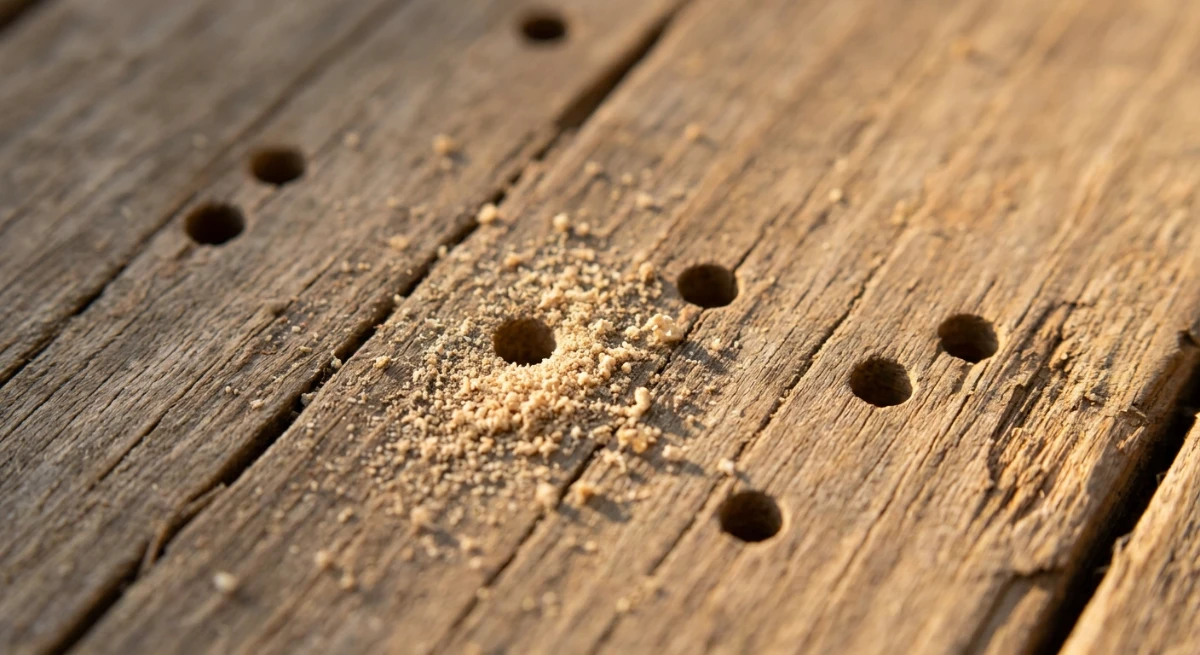
Every year between October and March, Auckland homeowners notice tiny 2mm flight holes appearing in their weatherboards, skirting boards, and antique furniture. This period is the notorious borer flight season, when adult beetles emerge from the wood to mate and lay eggs.

In a panic, many residents rush to the local hardware store to purchase aerosol borer bombs. While these bug bombs provide a satisfying immediate knockdown of flying insects in the room, they are fundamentally flawed as a standalone eradication method.

The adult beetles only live for about three to four weeks, meaning the bomb only addresses a tiny fraction of the overall infestation. The real damage is happening completely out of sight, deep within the wood grain where the aerosol mist cannot reach.

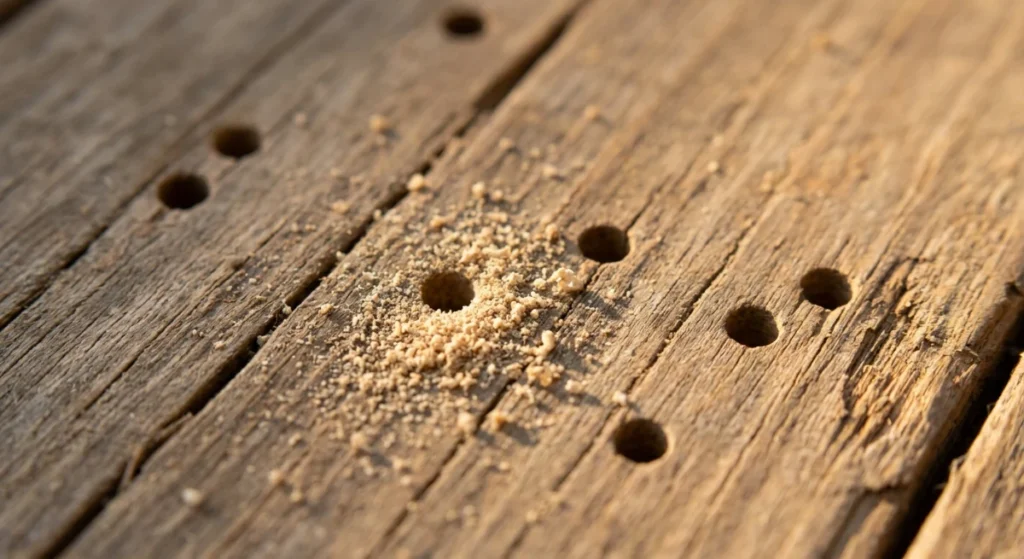
Borer flight holes and frass in New Zealand timber

The Limitations of Aerosol Treatments

Aerosol treatments are designed strictly for surface-level pest control. They release a chemical fog into the air that settles on exposed surfaces, killing insects that come into direct contact with the toxic residue.

However, wood is naturally porous and acts as a protective fortress for the larvae living inside. Borer grubs spend two to four years tunneling through your home’s structural timber, consuming cellulose and severely weakening the wood.

When you hire a borer treatment specialist in Auckland, you learn that aerosol bombs cannot penetrate the timber surface to reach these destructive grubs. Furthermore, setting off a bomb in your living room does absolutely nothing to protect the foundational piles and joists holding up your house.

⚠️

Warning: False Sense of Security

Relying solely on DIY borer bombs leaves the destructive larvae unharmed. They will continue to eat your home’s framing for years, potentially leading to thousands of dollars in structural repairs.

Deep Timber Penetration Requires Professional Equipment

To break the borer lifecycle permanently, the treatment must penetrate the wood deeply enough to reach the larvae or create a toxic barrier that kills emerging adults. This level of penetration is physically impossible to achieve with off-the-shelf consumer products.

Professionals use high-powered airless sprayers to apply specialized wet formulations directly to bare timber in your subfloor and roof voids. These treatments often contain sodium borate, a highly effective mineral salt that diffuses into the wood’s natural moisture.

Boron acts as an insecticide, fungicide, and wood preservative all in one single application. Because it does not break down over time, a professional boron treatment can protect your home’s structural timbers for up to a decade.

Borer Lifecycle Duration Chart showing the long larval stage

What to Expect from Our Borer Specialists

Deciding to hire a borer treatment specialist in Auckland is the best step toward protecting your property’s long-term value. But what exactly happens when a professional exterminator arrives at your home?

The process begins long before any chemicals are mixed or sprayed. A reputable technician will always start with a comprehensive site survey, as every home is unique and the severity of a borer infestation can vary wildly from one room to the next.

The specialist needs to identify the specific species of borer, assess the extent of the structural damage, and determine the most effective treatment protocol for your specific architecture.

Initial Property Assessment and Moisture Check

One of the most critical factors in borer control is moisture management. Borer larvae actually struggle to digest dry wood; they rely heavily on microscopic wood-rotting fungi to help break down the cellulose in their stomachs.

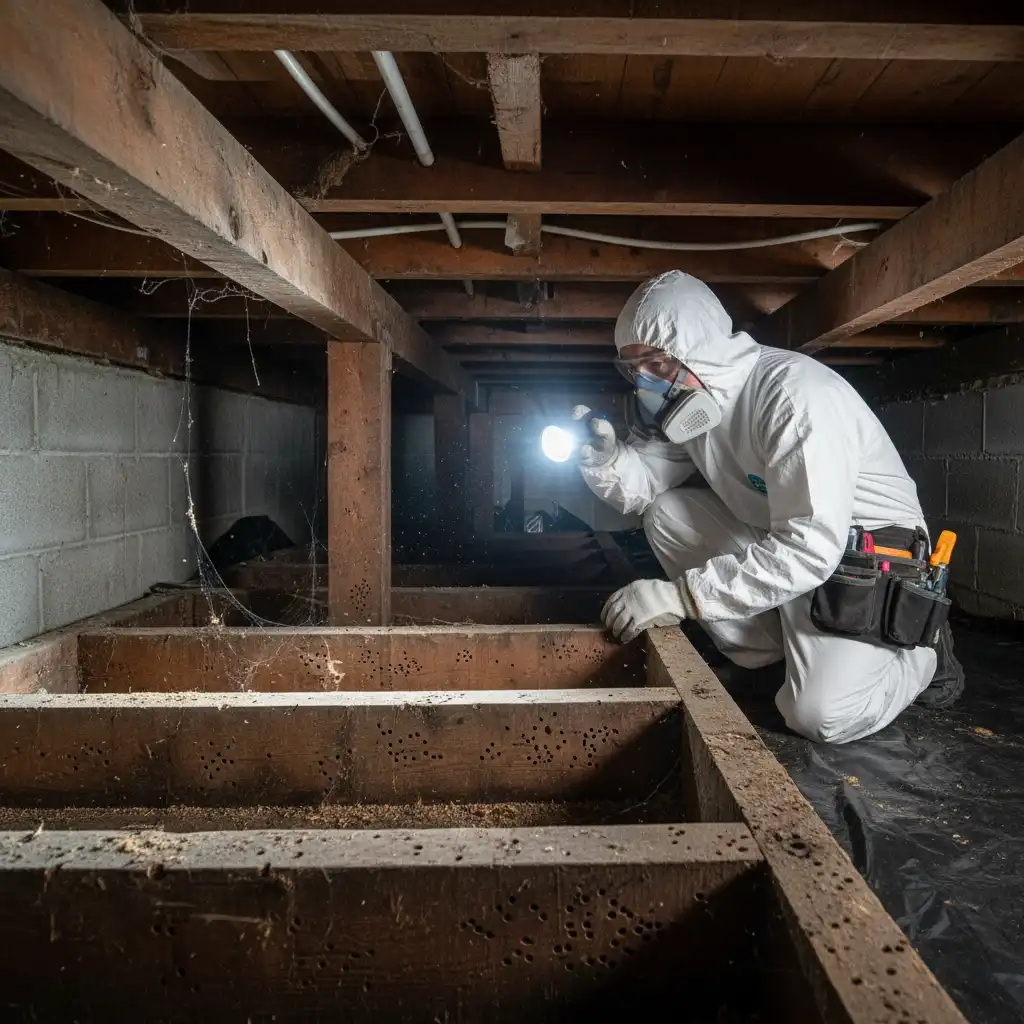
These essential fungi only grow when the timber’s moisture content exceeds 12%. During the initial assessment, your specialist will use digital moisture meters to test the subfloor and roof void timbers for excessive dampness.

Auckland’s coastal humidity, combined with poor subfloor ventilation in older homes, creates the perfect incubator for these pests. Addressing underlying moisture issues by installing vapor barriers or improving ventilation is just as important as the chemical application itself.

Action Step: Check Your Subfloor

Before your specialist arrives, ensure there is clear physical access to your subfloor hatch and roof cavity. Clearing away stored items will speed up the inspection process.

Professional borer treatment specialist in Auckland inspecting subfloor

Customized Treatment Plans for Historic Villas

Auckland is famous for its beautiful heritage villas and bungalows, many of which were built using native timbers like Rimu and Matai. While the heartwood of these trees is incredibly hard and resistant to the Common House Borer, the softer sapwood on the outer edges is highly vulnerable.

In some cases, your home may be under attack by the Two-toothed Longhorn Borer. This native species is much larger than the common borer and possesses the jaw strength to consume both sapwood and hard heartwood, causing rapid structural failure.

A tailored treatment plan ensures that the right chemical concentrations are used for the specific timber and pest species present. The technician will customize the spray volume to ensure maximum absorption into the wood grain.

Pest Feature Common House Borer Two-Toothed Longhorn Borer
Scientific Name Anobium punctatum Ambeodontus tristis
Flight Hole Size Approx. 2mm (Round) Up to 7mm (Oval)
Timber Preference Soft sapwood only Both sapwood and heartwood
Damage Potential Moderate to High (Cumulative) Severe (Rapid Structural Failure)

Certifications and Safety Standards

When introducing pest control chemicals into your living environment, safety is naturally a top concern for any homeowner. It is vital to hire a borer treatment specialist in Auckland who is fully certified and adheres to New Zealand’s strict environmental regulations.

Professional exterminators are rigorously trained in the safe handling, mixing, and application of restricted chemicals. They understand how to calculate the exact dosage required for your home’s square footage.

This precision ensures maximum efficacy against the wood-boring insects without over-saturating the environment or putting your local ecosystem at risk.

  • Technicians must hold relevant New Zealand pest management qualifications.
  • All applied chemicals must be registered and approved by the EPA.
  • Safety data sheets (SDS) should be available to the homeowner upon request.
  • Proper personal protective equipment (PPE) is worn during all subfloor applications.

EPA Approved and Pet-Safe Formulations

Modern borer treatments have evolved significantly from the harsh, highly toxic chemicals used in the mid-20th century. Today’s industry-standard products are designed to be devastating to insects but safe for mammals once fully dried.

During the application process, you will need to vacate the property for a few hours. Once the wet formulation has completely dried and bonded with the timber, it is entirely safe for your family and pets to return.

The residual protection remains securely locked inside the wood matrix. It poses no airborne threat to your household, giving you peace of mind alongside structural security.

📝

Note on Painted Wood

Professional wet treatments must be applied to bare, unpainted timber to absorb correctly. If your floorboards are varnished or painted, the technician may need to inject the treatment directly into the flight holes.

Get a Quote from Our Auckland Team

Understanding the costs associated with professional pest control helps you make an informed and confident decision. While prices vary based on property size, accessibility, and the severity of the infestation, investing in professional eradication is always cheaper than replacing structural timber.

For a standard three-bedroom home in Auckland, dedicated subfloor treatments typically start around $750. If the roof void also requires treatment, you can expect an additional $350 on average.

Comprehensive full-home treatments, which include both accessible voids and interior timber injections, generally range from $1,500 to $2,500. When you hire a borer treatment specialist in Auckland, you are securing specialized equipment, premium chemicals, and a warranty that guarantees results.

Bar chart comparing average borer treatment costs in Auckland for 2025

💡

Pro Tip: Check Your Insurance

Most New Zealand home insurance policies classify borer damage as gradual deterioration, meaning it is not covered. Proactive professional treatment is your best financial defense against this pest.

Restored Auckland villa protected from borer damage

Frequently Asked Questions

How much does it cost to hire a borer treatment specialist in Auckland?
The cost varies depending on the size of your property and the extent of the infestation. In 2025, Auckland subfloor treatments start around $750, roof voids around $350, and full 3-bedroom home treatments typically range between $1,500 and $2,500.
What time of year is best for borer treatment?
The best time for treatment is during the New Zealand spring, just before the adult insects emerge. However, because professional wet treatments penetrate the wood and remain active for years, they can be effectively applied at any time of the year to kill the larvae inside.
Do DIY borer bombs actually work?
DIY borer bombs only kill the adult beetles that have already emerged and are flying around your home. They do not penetrate the timber, meaning the destructive larvae living inside the wood are left completely unharmed to continue eating your home’s structure.
How long does professional borer treatment last?
When applied correctly by a certified specialist, high-quality wet formulations like sodium borate can protect your timber for 10 years or more under normal dry conditions. Most professional companies offer a standard 5 to 10-year warranty on their work.
Can borer cause structural damage to my home?
Yes, absolutely. Over decades, cumulative borer damage can severely weaken load-bearing timbers, floor joists, and weatherboards. The Two-Toothed Longhorn borer is especially dangerous as it attacks the hard heartwood, leading to rapid structural failure if left untreated.
How do I know if the borer in my house is active?
The clearest sign of an active infestation is the appearance of fresh, clean 2mm flight holes and small piles of fine, gritty dust (frass) beneath the holes. This dust is usually pushed out by emerging adults during the flight season between October and March.

Leave a Comment

Your email address will not be published. Required fields are marked *

Scroll to Top