We see it every week across Auckland. A cafe owner or homeowner blasts a can of hardware store spray, sweeps up the dead bugs, and thinks the war is won. A week later, the ants are marching in the exact same line. The cockroaches are back in the exact same fridge motor.
Why does this happen? Because you killed the bugs, but you left the map. Pests do not navigate by memory; they navigate by chemical signals. If you fail to break down these invisible markers, you are simply leaving a neon vacancy sign for the next colony.
Properly neutralising trail pheromones is the missing link in effective pest control. Without it, you are stuck in a cycle of endless re-infestation. We are going to show you exactly how to execute scientific cleaning protocols after ant and cockroach eradication to reclaim your space permanently.
Key Takeaways
Effectively neutralising trail pheromones requires enzymatic cleaners, not just bleach. Implementing strict scientific cleaning protocols after ant and cockroach eradication breaks down aggregation signals, preventing re-infestation. For Auckland hospitality venues, this level of proactive hygiene is legally required under the Food Act 2014 to avoid MPI fines.
The Hidden Map: How Pheromones Guarantee Re-infestation
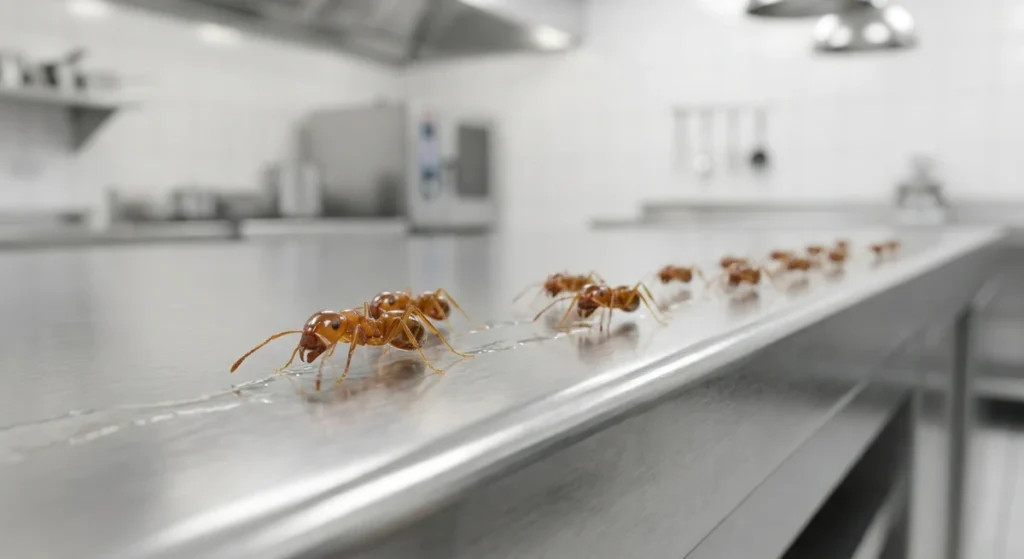
Ants and cockroaches do not wander aimlessly through your property. They operate on highly sophisticated, biologically ingrained chemical communication networks. When a scout ant finds a crumb in your pantry, it lays down a trail pheromone on its journey back to the nest.
This invisible chemical highway tells every other foraging ant exactly where to go. Even if you eradicate the current invaders, that trail remains active and highly attractive. Cockroaches take this a step further.
German cockroaches use aggregation pheromones found in their faeces and vomitus to signal safe harbourages. If you skip scientific cleaning protocols, you are leaving a biological beacon intact. Standard wiping does not cut it; you need a targeted approach to break down these specific lipid-based markers.
Ant Trail Pheromones
Ant trails are incredibly resilient. They are composed of complex hydrocarbons designed to withstand light rain and environmental wear. These trails are also directional, meaning they guide the colony straight to the food source and back to the nest with perfect efficiency.
Cockroach Aggregation Pheromones
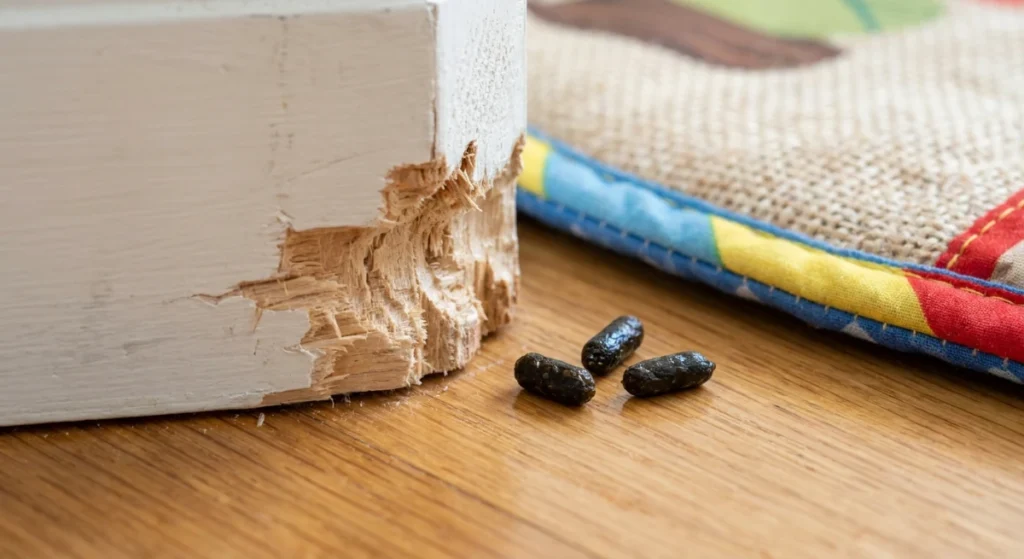
Cockroach pheromones are arguably worse. They are heavily concentrated in the insects’ faecal matter. Scientific studies show that these droppings contain volatile carboxylic acids that act as potent attractants, drawing other roaches to nest in the exact same crevices.

Why Standard Cleaning Fails
Most Aucklanders reach straight for the bleach when they see pests. While bleach is an excellent sanitiser that kills bacteria, it is surprisingly ineffective at neutralising trail pheromones. Bleach primarily disinfects; it does not reliably dissolve heavy lipid barriers.
Insect pheromones are essentially waxy, oily substances. When you wipe them with a standard household cleaner or bleach, you often just smear the oils around. The chemical signature remains fully detectable to the next wave of pests.
Simply wiping a surface with bleach will sanitise the area but fails to break down the complex lipids in insect pheromones. The chemical trail remains fully active and will attract new pests within days.
Scientific Cleaning Protocols After Ant Eradication
To effectively execute scientific cleaning protocols after ant eradication, you must target the exact routes the insects travelled. Start by identifying the structural entry points. This is usually around window frames, skirting boards, or tiny gaps in the foundation.
Once the entry point is identified, do not just wipe the visible trail. You need to use a high-quality enzymatic cleaner or a heavy-duty surfactant. These solutions actively break down the chemical bonds of the pheromones.
Wash the entire pathway thoroughly, extending your cleaning at least a metre past where the visible trail ended. This ensures you eliminate any scattered scent markers left by outlier scout ants.
For a fast, effective breakdown of ant pheromones, mix equal parts white vinegar and warm water, adding a generous dash of dish detergent. The vinegar disrupts the scent profile, while the soap breaks down the lipid barrier.
Neutralising Aggregation Pheromones After Cockroach Eradication
Cockroaches are a completely different beast. They thrive in aggregates, meaning they love to cram into tight, dark spaces together. They mark these safe zones using potent aggregation pheromones excreted directly in their droppings.
When we wipe out a German cockroach infestation, the cleanup phase is critical. The lingering faecal matter contains over 150 different chemical compounds. If left behind, new cockroaches will find this harbourage and immediately move in.
Scientific cleaning protocols after cockroach eradication require deep, methodical scrubbing. You must pull out fridges, ovens, and dishwashers. Target the hinges of cabinets, the rubber seals of appliances, and the warm voids near motors.
Use an enzymatic bio-cleaner specifically designed to digest organic matter. Scrubbing away the dark, pepper-like faecal specks is non-negotiable. If you leave even a trace of this organic matter, the aggregation signal remains active.

German cockroaches aggregate near heat and moisture. Always focus your enzymatic cleaning efforts on the compressor motors of commercial fridges, dishwasher voids, and the undersides of coffee machines.
The Food Act 2014 and Auckland Hospitality Compliance
Auckland’s hospitality sector is booming, hitting a record $15.99 billion turnover in FY2025. With that massive volume comes intense scrutiny from the Ministry for Primary Industries (MPI) and local council health inspectors. You simply cannot afford to fail a health audit because of lingering pest evidence.
Under the Food Act 2014, commercial kitchens must operate under a strict, proactive pest management plan. It is no longer acceptable to just react to a cockroach sighting. You must prove to auditors that you are actively preventing infestations before they occur.
This means your pest control strategy must include structural exclusion, non-toxic monitoring, and rigorous neutralising of trail pheromones. Inspectors actively look for faecal spotting as evidence of a recent infestation. If they see it, you risk losing your ‘A’ Grade rating instantly.
Commercial food sector pest control requires highly qualified technicians. Our team holds the New Zealand Certificate in Pest Operations (Level 3), ensuring all treatments and cleaning advice comply strictly with the EPA and Food Act 2014.
Data: Why Cleaning Protocols Dictate Success
We track re-infestation rates closely across our Auckland commercial and residential clients. The data is undeniable. Eradication without chemical neutralisation is a temporary fix.
When clients follow our strict post-treatment cleaning protocols, the risk of pests returning plummets. When they rely on standard wiping, the pheromones draw pests back within weeks.
The chart below illustrates the probability of a secondary infestation occurring over a 4-week period, comparing standard bleach wiping against our recommended enzymatic neutralisation protocol.
The True Cost of Professional Pest Management vs DIY
Many Aucklanders waste hundreds of dollars on DIY hardware store bombs. These products scatter the pests, pushing them deeper into your wall cavities. The ‘DIY Cycle of Despair’ is real, and it ends up costing you significantly more in the long run.
At Pest Control Auckland, we believe in upfront, transparent pricing. We tackle the root cause, provide the eradication, and guide you through the exact scientific cleaning protocols needed to keep them gone forever.
Here is what you can expect to pay for a standard 3-bedroom Auckland home, including our post-treatment hygiene guidance:
| Pest Type | Average Cost (Transparent Pricing) | Treatment Focus | Post-Treatment Cleaning Priority |
|---|---|---|---|
| Ants | $160 – $200 | Baiting & Entry-Point Exclusion | Baseboards, window frames, kitchen counters. |
| Cockroaches | $265 – $325 | Gel Baits & Flush-out | Appliance motors, cabinet hinges, dark voids. |
| Rodents | $155 – $325 | Non-toxic monitoring & Trapping | Roof voids, entry points, droppings removal. |
| Bed Bugs | $215 – $265 per room | Residual spray & Heat | Mattress seams, bed frames, skirting boards. |
Predictive Integrated Pest Management (IPM)
The pest control industry is shifting rapidly. As Auckland prepares to host the FAOPMA Pest Summit in July 2026, the global focus is squarely on Predictive Integrated Pest Management (IPM). We do not just react to problems anymore; we anticipate them.
By understanding seasonal shifts—like the massive autumn pest surge we are currently seeing—we can implement preventative barriers before the pests arrive. But a chemical barrier is only as good as the hygiene practices behind it.
That is exactly why we back our work with the “Silver Bullet Guarantee.” We provide the root-cause eradication, we seal the structural entry points, and we give you the precise blueprint for neutralising trail pheromones. It is a partnership that guarantees long-term results.
Frequently Asked Questions

About the Author: Ronnie
Founder, Pest Control Auckland · Commercial & Residential Pest Expert · Certified Urban Pest Management Specialist
With years of experience in predictive Integrated Pest Management and commercial biosecurity, Ronnie is a leading authority on Auckland’s unique pest pressures. Having consulted for top hospitality venues to ensure Food Act 2014 compliance, he specialises in the entomological science of neutralising trail pheromones and structural exclusion.