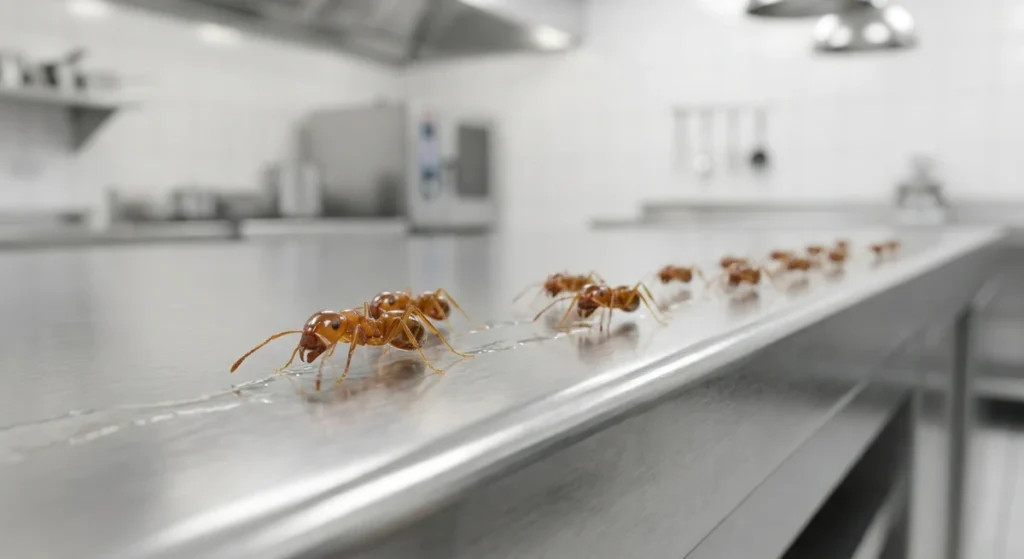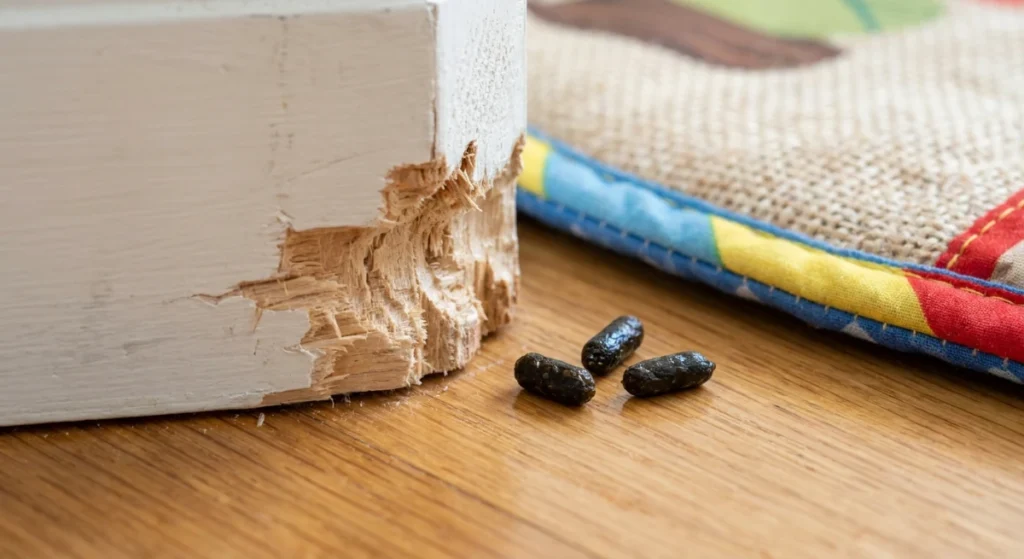
I get it. You have just put your six-month-old down for a nap, and then you hear it. The unmistakable scratching of a rat in the ceiling cavity. Or maybe you spot a cockroach darting under the changing table.
You want the pests gone immediately, but your first thought is safety. Will the chemicals harm my baby? How long do we need to stay out of the house?
As an Auckland pest technician who has seen it all, I will tell you plainly: the era of toxic “spray and pray” is dead. We do not gamble with your family’s health, and you shouldn’t have to either. Understanding the correct protocols for infant-safe post-treatment sanitisation is the difference between a stressful ordeal and total peace of mind.
Let us break down exactly what happens, what you need to do, and when it is truly safe to bring your baby back home.
Key Takeaways
For effective infant-safe post-treatment sanitisation, wait at least 24 hours before bringing babies home. Wash all toys in hot, soapy water, but do not mop treated skirting boards for two weeks. Always hire Level 3 certified technicians who follow EPA HPC Notice 2017 guidelines for maximum safety.
The 2026 Auckland Pest Reality: Why We Do Not Gamble with Infants
Auckland is currently experiencing an intense autumn pest surge in May 2026. A mild winter followed by a hot summer has driven massive rodent and insect populations indoors. While large-scale conservation efforts like the recent Hūnua Ranges 1080 drops have been highly successful, urban residential areas are still heavily impacted.
Many panicked parents fall into the “DIY Cycle of Despair.” They buy cheap hardware store bug bombs, set them off in the hallway, and hope for the best. This is incredibly dangerous for young families.
Over-the-counter foggers disperse toxic residue onto every surface, including your baby’s playmat. There is no targeted application, just a blanket of chemicals that fails to reach the actual nests.
Under New Zealand’s HSNO Act 1996 and the EPA HPC Notice 2017, the handling of Class 9 ecotoxic substances requires strict compliance. This is why hiring a Level 3 certified Urban Pest Management technician is non-negotiable for family homes.
We focus entirely on targeted, scientific eradication. We find the structural entry point and fix the root cause, rather than just treating the symptoms. This keeps your home safe and ensures the pests do not return.
Pre-Treatment: Securing the Nursery Before We Arrive
Before we even step foot on your property, the preparation phase begins. Your technician will provide a detailed checklist, but the fundamental rule is simple: remove the risk of cross-contamination.
You need to clear the floors entirely. Pack away all loose items, especially anything that goes into a child’s mouth. This includes teething rings, soft toys, bottles, and dummies.
Strip the cot of its bedding and store it in a sealed plastic bag or a closed wardrobe. The goal is to leave the room as bare as possible so we can apply our targeted perimeter treatments without anything getting in the way.
Seal all baby food and formula in airtight containers. Remove all toys from the floor. Cover the baby’s cot with a plastic sheet, and ensure all windows are closed prior to our arrival.
Re-Entry Timelines: The 24-Hour Rule for Babies
Every treatment is different, and so are the timelines. Labels on standard pesticides might list a four-hour re-entry window. For adults, this is generally fine once the surfaces are completely dry and the house has been ventilated.
However, infants are a completely different story. They have developing respiratory systems and spend most of their time crawling on the floor. For babies, we strongly advise a strict 24-hour absence.
This buffer guarantees that all targeted applications have fully bonded to the surfaces and any residual airborne particles have completely dissipated. It is simply not worth rushing back in.
Infant-Safe Post-Treatment Sanitisation: How to Clean Play Areas and Toys After Pest Management
When you finally return home, the work is not quite finished. Proper infant-safe post-treatment sanitisation ensures your baby can crawl freely without exposure to residual treatments.
The golden rule of cleaning play areas and toys after pest management is focusing strictly on high-touch zones while leaving our perimeter barriers entirely intact. You want to clean the items your baby touches, not the areas the pests use to travel.
If you accidentally left a hard plastic toy out during a treatment, wash it immediately in hot, soapy water. Fabric items like playmats, blankets, or stuffed animals should go straight into the washing machine on a warm cycle.
Never mop the edges of your rooms immediately after a treatment. Our zero-emission products are designed to bind to the skirting boards. Mopping with hot soapy water on day one will completely wash away your protection.
Wipe down high chairs, changing tables, and benchtops with your standard household surface cleaner. Vacuum the center of your carpets to pick up any dead insects, but keep the vacuum head at least 15 centimetres away from the walls.
| Surface / Item Type | Cleaning Action Required | Timeline |
|---|---|---|
| Hard Plastic Toys | Wash thoroughly in hot, soapy water. | Immediately upon re-entry. |
| Fabric Playmats & Bedding | Machine wash on a warm cycle. | Immediately upon re-entry. |
| High-Touch Surfaces (Tables) | Wipe down with standard household cleaner. | Immediately upon re-entry. |
| Skirting Boards & Perimeters | Do nothing. Leave completely alone. | Wait at least 14 days before mopping. |
Commercial Spaces: Childcares and Family Restaurants
The stakes are even higher in commercial settings. Childcare centres and family restaurants across Auckland face immense pressure to maintain zero-tolerance hygiene standards. An infestation can ruin a reputation overnight.
Under the Food Act 2014, commercial food and childcare sectors are strictly prohibited from using toxic rodenticide baits in sensitive areas. Instead, we rely on Predictive Integrated Pest Management (IPM).
This involves non-toxic monitoring stations, mechanical exclusion, and zero-emission treatments that pose zero risk to crawling toddlers or food preparation zones. It is a highly scientific approach.
The pest control industry is shifting rapidly. Auckland is preparing to host the FAOPMA Pest Summit in July 2026 at the NZICC. Themed “FutureProof,” this summit highlights the exact eco-conscious, targeted interventions we already use to protect Auckland’s most vulnerable residents.
The “Silver Bullet Guarantee” and Root-Cause Eradication
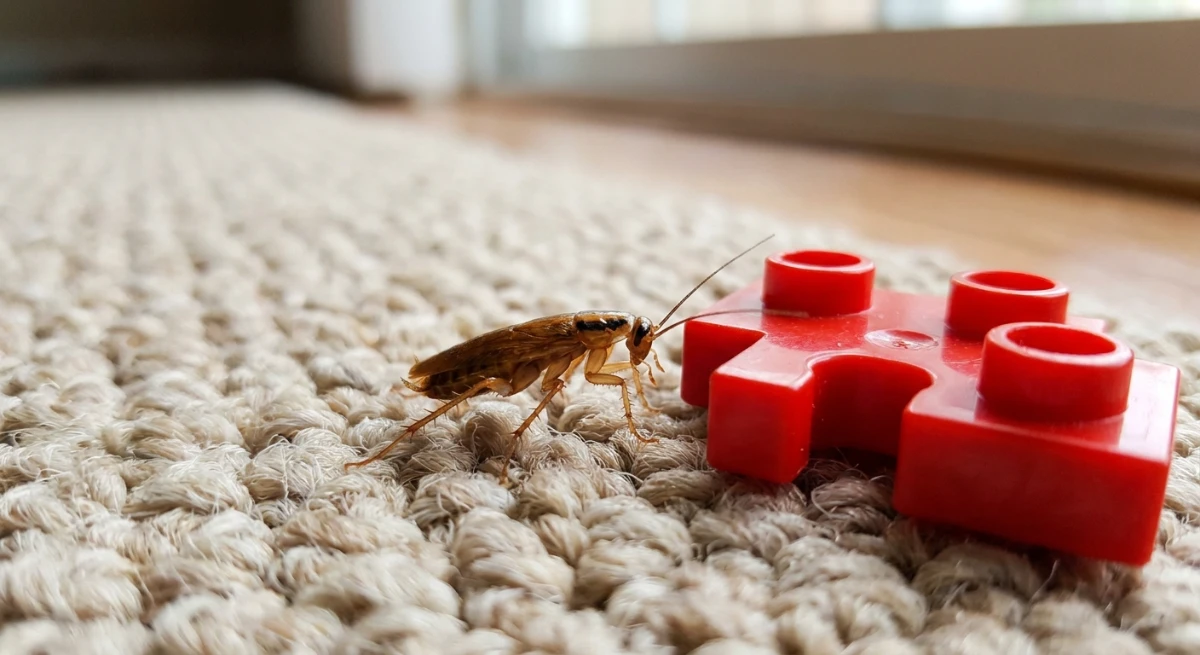
You do not want to pay for a service only to see cockroaches again three weeks later. That is why we back our work with the Silver Bullet Guarantee. We fix it once, and we fix it right.
We do not just treat the symptoms. We conduct a full structural audit to identify exactly how pests are entering your home. By sealing entry points and providing ongoing preventative advice, we break the breeding cycle permanently.
Our approach is simple: honest advice, transparent pricing, and treatments that prioritize the safety of your family above all else. You get your sanctuary back, and your kids stay safe.
Frequently Asked Questions

About the Author: Ronnie
Founder, Pest Control Auckland · Commercial & Residential Pest Expert · Certified Urban Pest Management Specialist
With years of experience in high-compliance commercial pest control and residential safety, Ronnie is uniquely qualified to outline Infant-Safe Post-Treatment Sanitisation protocols. Having consulted for numerous Auckland childcare centres and family homes, his expertise ensures that vulnerable infants are protected through strict adherence to EPA guidelines and scientific eradication methods.