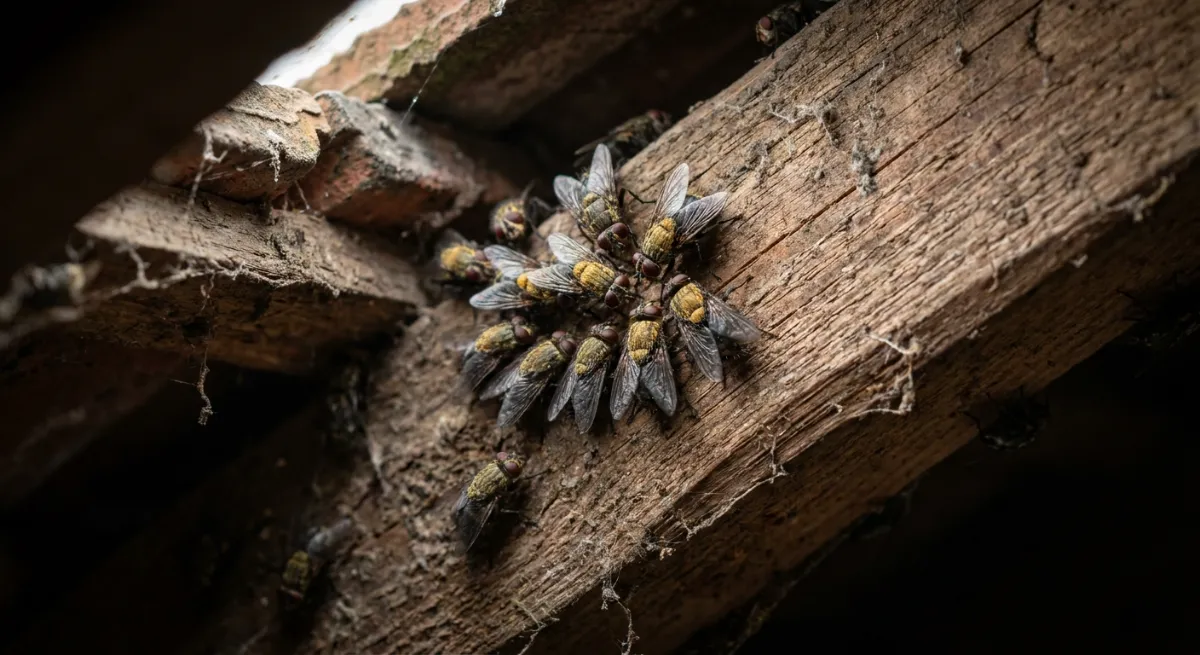
Autumn hits Franklin, the temperature drops, and suddenly your ceiling sounds like it is vibrating. You pop your head up through the manhole, shine a torch into the dark, and find thousands of dopey, dark grey flies plastered against the timber.
That is a cluster fly invasion. I see this exact scenario play out every single year across rural South Auckland and its sprawling lifestyle blocks. They do not care how clean your house is, and they are not interested in your kitchen scraps.
They just want a warm, dry place to sleep through the winter. If you ignore them, they multiply. If you throw a cheap hardware store bug bomb at them, they laugh it off and return the following year.
We are going to talk straight about Managing Cluster Fly Invasions in Franklin Roof Cavities: Autumn Prevention and Treatment. No fluff, no corporate hedging—just the scientific reality of what is happening in your attic and exactly how we stop it.
Key Takeaways
Managing Cluster Fly Invasions in Franklin Roof Cavities requires structural exclusion and targeted, MPI-approved residual treatments. DIY bug bombs fail because cluster flies leave potent survival pheromones that attract future swarms to the exact same attic timbers year after year.
Why Your Franklin Roof is a Magnet for Cluster Flies in Autumn
Living in the Franklin district offers a brilliant rural lifestyle. You have rolling green pastures, expansive lifestyle blocks, and working farms. But those same lush pastures are a massive breeding ground for earthworms.
This matters because cluster flies (Pollenia rudis) rely entirely on earthworms to breed. The female flies lay their eggs in the soil of your lawns and paddocks.
When those eggs hatch, the larvae parasitize the local earthworm population. They feed, they grow, and they emerge as adult flies during the warmer months. There are usually up to four generations per year.
The Hibernation Instinct
When May rolls around and the temperature drops, survival instinct kicks in. These flies are not looking for a quick meal; they are looking for a secure hibernation bunker.
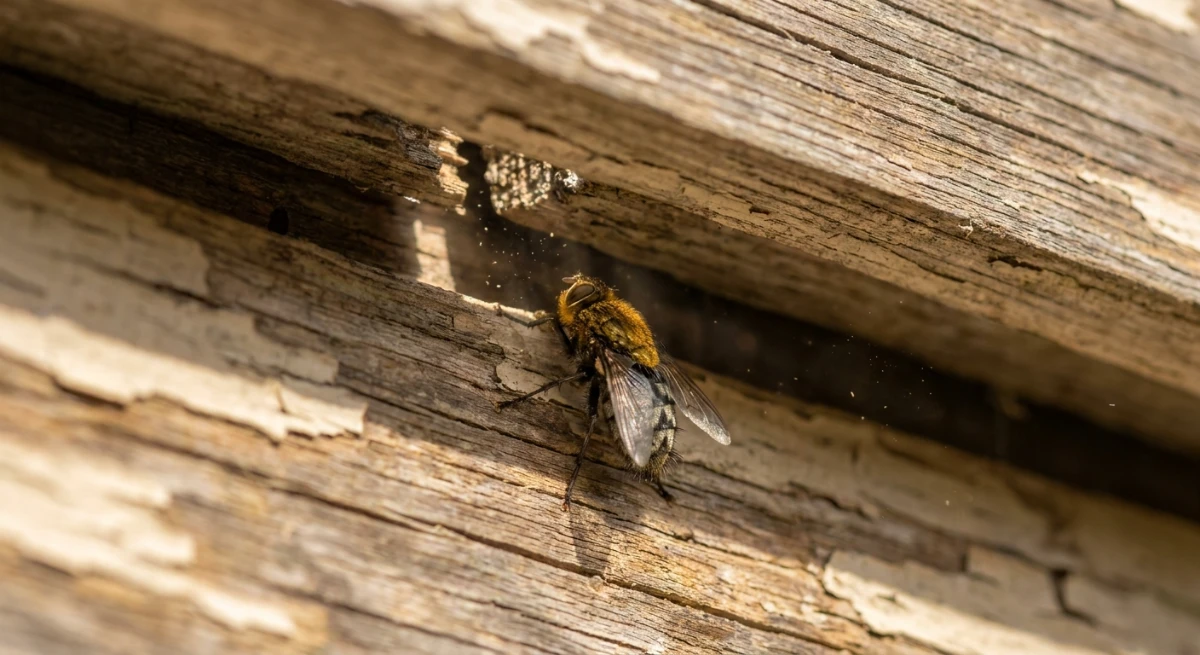
Your dark, dry, and warm roof cavity is the perfect five-star winter resort. They squeeze through tiny gaps under corrugated iron roofs, through soffit vents, and between weatherboards.
The Pheromone Beacon
Here is the part most homeowners do not realize. Once a cluster fly finds a good spot in your attic, it releases a potent survival pheromone. This chemical signal acts as a homing beacon.
It calls out to every other cluster fly in the vicinity. Even if you manage to clear out the current swarm, that pheromone lingers on your attic timbers for months, sometimes years.
Next autumn, a brand new generation of flies will follow that exact same scent trail right back into your house. This is why Managing Cluster Fly Invasions in Franklin Roof Cavities is never a one-off job.
The DIY Cycle of Despair: Why Bug Bombs Fail
When faced with thousands of buzzing flies, your first instinct is usually to grab a multipack of bug bombs from the local hardware store. You set them off in the roof, close the hatch, and hope for the best.
A few days later, you sweep up a dustpan full of dead flies. You think you have won. But you have only scratched the surface of the problem.
Hardware store foggers only kill the flies currently flying in the airspace. They do not penetrate deep into the insulation, wall voids, or tight timber junctions where the majority of the swarm is actually hiding.
Surface Spray vs. Root-Cause Eradication
The surviving flies simply dig deeper into your insulation to escape the mist. Worse, the bug bomb does absolutely nothing to mask or remove the pheromones left behind on the wood.
You have wasted your weekend and your money. The cycle of despair continues. True eradication requires a scientific approach, utilizing professional-grade formulations that provide long-lasting residual control.
Scientific Eradication: How We Fix It
At Pest Control Auckland, we do not just spray and walk away. We use Predictive Integrated Pest Management (IPM) to stop the problem at its source before it spirals out of control.
Our technicians hold the New Zealand Certificate in Pest Operations (Level 3). We understand the entomology of the cluster fly and exactly how to dismantle their overwintering strategy legally and safely.
Targeted Roof Void Treatments
First, we apply an MPI-approved, zero-emission residual treatment directly to the surfaces where the flies congregate. This is not a generic fly spray; it is a specialized formulation.
It is designed to remain active on rough attic timber for months. When the flies land on the treated wood, they absorb the active ingredient and die, rapidly dropping the population in your roof space.
Structural Exclusion and Sealing
The second phase of Autumn Prevention and Treatment is physical exclusion. We inspect your roofline, eaves, and vents to identify exactly how the flies are getting in.
We provide actionable advice on sealing gaps around corrugated iron, weatherboards, and soffits. If you cut off their entry points, you cut off the invasion entirely.
Cluster flies are naturally drawn to light. Installing a simple light bulb in your roof space and leaving it on for a few hours at night during late autumn can disrupt their hibernation and draw them away from hiding spots.
Commercial & Hospitality Impact in Auckland
Cluster flies are not just a residential nuisance. For rural cafes, wedding venues, and wineries in the Franklin and wider Auckland region, they are a massive commercial liability.
Imagine hosting a premium event, only to have sluggish, dopey flies dropping from the ceiling fixtures onto dining tables when the heating turns on. It ruins your reputation instantly.
MPI Regulations and Food Safety
The New Zealand Food Act 2014 and the Ministry for Primary Industries (MPI) enforce zero-tolerance policies for pest activity in commercial food zones. While cluster flies do not breed in garbage, they are still a contamination risk.
Commercial operators cannot rely on toxic airborne sprays that might contaminate food prep surfaces. You need a highly controlled, compliant pest management plan executed by certified professionals.
Our commercial treatments include a detailed pest sighting logbook and compliance documentation that satisfies MPI audits and local council health inspections.
Comparing Fly Treatment Methods
Not all pest control approaches are created equal. If you want to stop the autumn influx, you need to understand the difference between reactive and proactive methods.
We have broken down the standard options below so you can see exactly why surface-level treatments fail to provide long-term relief.
| Treatment Method | Immediate Effectiveness | Longevity & Residual Action | Pheromone Disruption |
|---|---|---|---|
| DIY Hardware Bug Bombs | Low (Only kills airborne flies) | None (Zero residual protection) | Fails entirely |
| Generic Exterminator Spray | Moderate | Short-term (Washes away easily) | Weak |
| Predictive IPM (Pest Control Auckland) | High (Targets nesting zones) | Long-term (Binds to attic timber) | Highly Effective |
Autumn Prevention: What You Can Do Right Now
Before May rolls around and the temperatures plummet, there are practical steps you can take to fortify your Franklin property. Prevention is always cheaper than a full-scale eradication.
You need to view your home as a fortress. If you leave the gates open, the pests will march right in.
Inspect your exterior walls and roofline for cracks. Ensure all vent screens are intact and fit tightly. Check around window frames and seal any gaps with high-quality exterior caulk.
Manage Your Lawns and Pastures
Because cluster flies breed inside earthworms, the state of your lawns matters. Keeping grass cut short around the immediate perimeter of your house can reduce the local breeding population.
You cannot eliminate earthworms—they are great for your soil—but you can create a buffer zone. A professional exterior residual spray applied in late summer can knock down the emerging flies before they even reach your house.
- Seal gaps around window pulleys and loose-fitting wall switches.
- Install fine mesh over all soffit and gable vents.
- Book a preventative exterior perimeter spray in late February or March.
- Keep compost bins and manure piles well away from the main dwelling.
The Silver Bullet Guarantee
We know how frustrating it is to pay for a service only to have the pests return a month later. That is why we back our work with the “Silver Bullet Guarantee.”
We are a local, family-owned business led by certified experts. We give you honest advice, transparent pricing, and treatments that actually work.
With the FAOPMA Pest Summit coming to Auckland in July 2026, the industry is shifting toward smarter, safer solutions. We are already there, delivering world-class IPM to Franklin residents.
Frequently Asked Questions

About the Author: Ronnie
Founder, Pest Control Auckland · Commercial & Residential Pest Expert · Certified Urban Pest Management Specialist
With years of hands-on experience navigating New Zealand’s strict biosecurity laws and the Food Act 2014, Ronnie is the definitive expert on Managing Cluster Fly Invasions in Franklin Roof Cavities: Autumn Prevention and Treatment. Having consulted for major rural hospitality venues and countless lifestyle block owners across South Auckland, he specializes in scientific structural exclusion and long-term Integrated Pest Management.