Running a commercial kitchen in Auckland right now is a high-wire act. The New Zealand hospitality sector just hit a record $15.99 billion turnover, but every operator knows that margins are razor-thin. Now, add the severe autumn pest surge we are seeing in May 2026. Rats, mice, and cockroaches are aggressively pushing indoors, looking for warmth, water, and grease.
If a Ministry for Primary Industries (MPI) auditor walks into your prep area and spots a German cockroach, or worse, an illegal toxic bait station near the pass, your ‘A’ Grade is gone. You could be shut down on the spot. You cannot just grab a can of commercial bug spray and blast the skirting boards anymore. The Food Act 2014 strictly prohibits toxic, reactive “spray and pray” methods in sensitive food zones.
You need a certified, zero-emission approach that actually works. We provide eco-friendly commercial kitchen pest management that stops infestations at the structural level. We fix the root cause, keep your doors open, and ensure your food remains completely safe from chemical contamination.
Key Takeaways
Effective eco-friendly commercial kitchen pest management relies on structural exclusion and non-toxic monitoring to comply with the Food Act 2014. Toxic rodenticides are banned in food zones. You must use certified Level 3 technicians to implement Integrated Pest Management (IPM) and secure your MPI compliance certificate.
The Science of Green Pest Control in Kitchens
We do not just spray and walk away. That old-school method is dead, especially in the hospitality sector. True green pest control is built on Predictive Integrated Pest Management (IPM).
IPM means we use science, not just harsh chemicals, to break the breeding cycle. In a high-heat, high-moisture environment like an Auckland commercial kitchen, pests thrive in hidden micro-climates. They live behind dishwashers, inside the warm motors of commercial fridges, and deep within unsealed wall voids.
Instead of fogging your kitchen with airborne toxins, we use targeted, zero-emission gel baits and IoT-enabled smart traps. These modern methods are rigorously tested, completely safe for food preparation environments, and explicitly approved by MPI guidelines.
The data is clear. Reactive chemical spraying is failing because pests build resistance, and the chemicals degrade rapidly in hot, greasy environments. Predictive IPM succeeds because it removes the environmental factors pests need to survive in the first place.
Entomological Approaches to Pest Exclusion
To truly eradicate a problem, you have to think like the pest. We use an entomological approach to identify exactly how insects and rodents are breaching your perimeter. We look at the biology and behavior of the specific species invading your space.
Rats do not just materialize out of thin air. They follow established pheromone trails through compromised sub-floors, chewed utility lines, or poorly sealed delivery doors. German cockroaches, the absolute bane of the hospitality industry, rarely walk in off the street. They hitch a ride inside the corrugated cardboard boxes delivered by your food suppliers.
Our primary job is structural exclusion. We seal the entry points using commercial-grade expanding foam embedded with copper mesh, which rodents cannot chew through. We disrupt their pheromone trails and eliminate their nesting environments. If they cannot get in, and they cannot breed, the infestation collapses naturally.
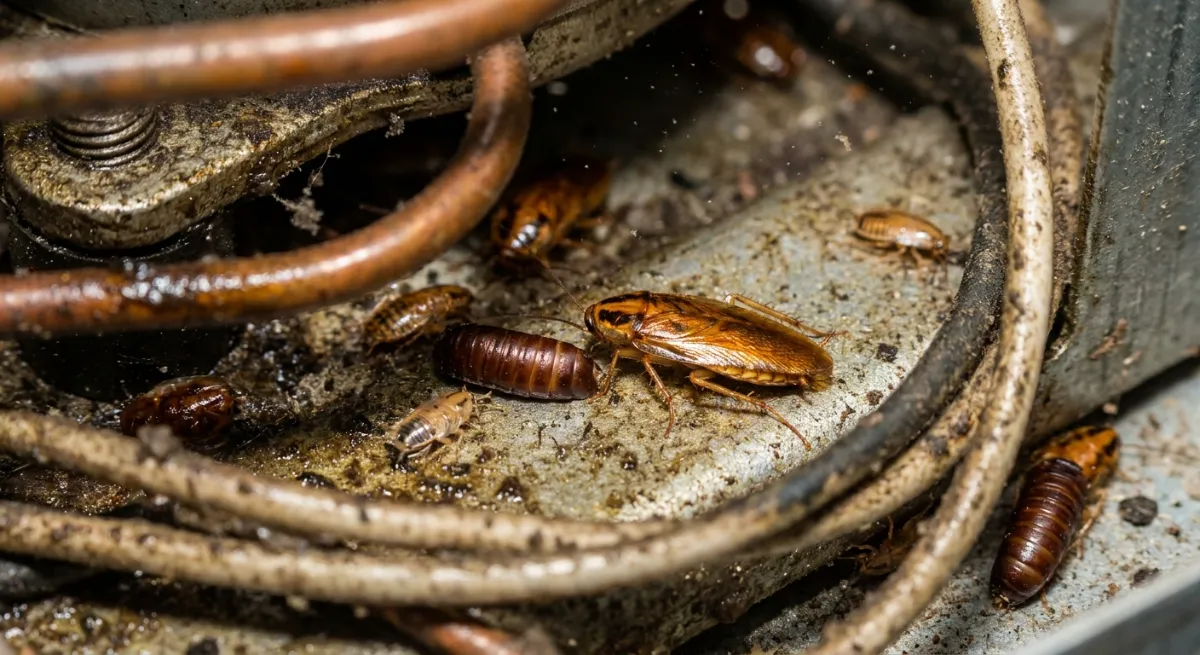
Never store supplier cardboard boxes inside your dry store or prep areas. Break them down and remove them immediately. Cardboard is the number one transport vehicle for German cockroach egg casings.
Avoiding ‘Greenwashing’ in Pest Control
A lot of companies slap a green leaf sticker on their van, buy a botanical spray from the hardware store, and call it a day. That is greenwashing, and it will fail an MPI audit instantly.
True eco-friendly commercial kitchen pest management requires certified proof and scientific rigor. If a technician cannot instantly produce the Safety Data Sheets (SDS) for what they are applying, kick them out of your kitchen. You are the one who will face the fines, not them.
Using unapproved domestic pest control products in a commercial kitchen violates the Food Act 2014. If an auditor finds hardware-store baits near food zones, you risk immediate closure.
We operate with total transparency. Every single product we use is heavily vetted for commercial food environments. We provide you with the exact compliance documentation your health inspector wants to see, neatly organized in a dedicated site folder.
Safety Data Sheets (SDS) and Full Transparency
Under the Food Act 2014, your pest control records must be immaculate. An auditor will scrutinize your logbook to ensure no ecotoxic substances are risking cross-contamination with your food prep surfaces.
This is exactly why you need a “Qualified UPM Contractor” holding a New Zealand Certificate in Pest Operations (Level 3). We know the HSNO Act 1996 inside and out. We know exactly what is legally permitted in an Auckland commercial food zone and what is strictly banned.
When we manage your property, we install secure, tamper-proof monitoring stations. Each station is barcoded and logged. After every visit, you receive a digital report detailing activity levels, structural recommendations, and updated SDS records.
| Pest Control Method | Commercial Kitchen Status | MPI / Food Act Compliance |
|---|---|---|
| Toxic Rodenticide Baits | Strictly Banned Indoors | High risk of cross-contamination. Instant audit failure if found in prep zones. |
| Aerosol / Fogging Sprays | Highly Restricted | Requires full kitchen shutdown and deep clean afterward due to chemical drift. |
| Mechanical Snap Traps | Approved | Must be housed in tamper-proof stations and checked regularly. |
| Targeted Gel Baits (Insects) | Approved | Zero-emission. Placed directly into cracks/crevices away from food surfaces. |
If you are using live-capture traps in your commercial space, New Zealand law dictates they must be physically inspected within 12 hours after sunrise every single day. We automate this compliance with smart-trap technology.
Protecting Staff and Food from Ecotoxic Substances
Your staff’s health and your customers’ safety are non-negotiable. Traditional aerosol sprays cause chemical drift, which inevitably settles on chopping boards, utensils, and open ingredients.
By utilizing targeted, non-volatile treatments, we eliminate the risk of respiratory irritation for your kitchen crew. Our methods mean you do not have to shut down your entire operation for 24 hours just to get a treatment done. We work discreetly, effectively, and safely.
The entire industry is waking up to this reality. In July 2026, Auckland is hosting the prestigious FAOPMA Pest Summit at the NZICC. The theme is “FutureProof: Smarter Pest Solutions for a Rapidly Changing World.” The global experts are shifting entirely toward the zero-emission, highly targeted IPM methods we already use every day.
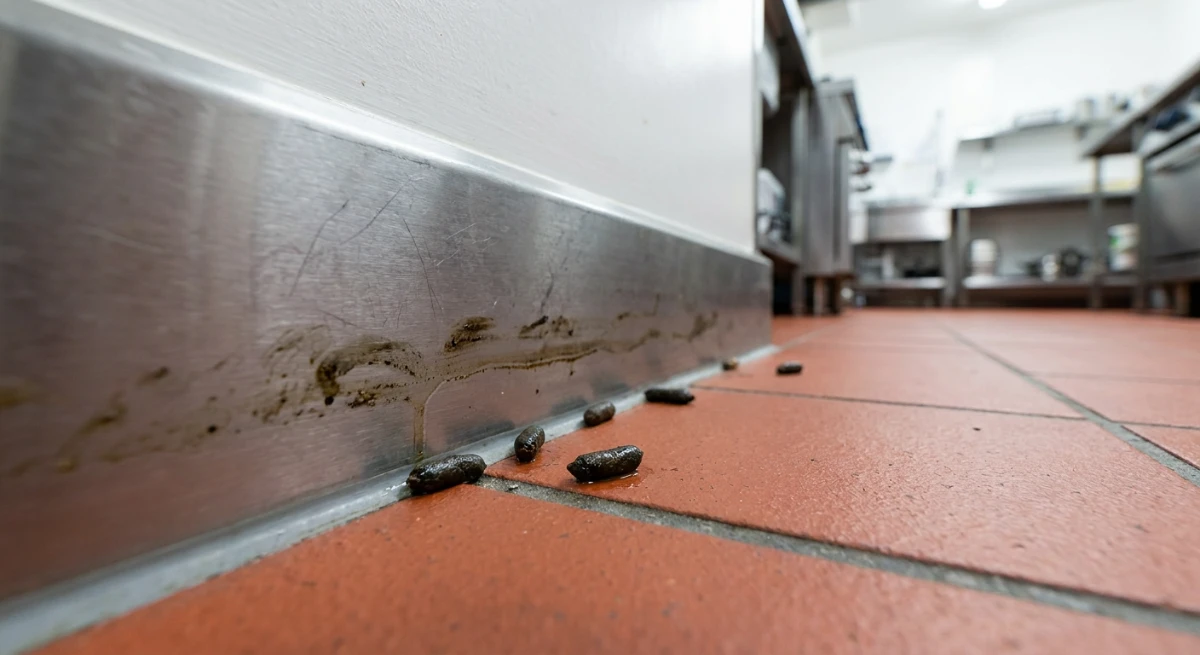
When you implement eco-friendly commercial kitchen pest management, you are not just ticking a compliance box. You are actively future-proofing your business against evolving regulations and increasingly strict health audits.
- Zero Chemical Drift: No risk of contaminating prep surfaces or ingredients.
- No Operational Downtime: Treatments can be applied discreetly without forcing a 24-hour kitchen closure.
- Long-Term Efficacy: Structural exclusion stops the next generation of pests, rather than just killing the ones currently visible.
- Audit-Ready Documentation: Instantly provide inspectors with compliant SDS and monitoring logs.
Book an Eco-Friendly Kitchen Assessment
Do not wait for a failed health inspection to take action. The autumn pest surge is already pushing rodents and insects into Auckland’s commercial spaces. If you are seeing one cockroach during a busy service, there is a nest of hundreds hiding behind your equipment.
We offer a comprehensive compliance assessment tailored specifically for the hospitality sector. We will find the structural vulnerabilities, set up MPI-approved monitoring stations, and give you the exact documentation you need to satisfy your verifier.
Review your current pest control logbook today. If it lacks recent SDS sheets or relies on indoor toxic baits, you are at risk. Contact us to upgrade your system to a compliant IPM framework.
Backed by our Silver Bullet Guarantee, we fix the problem at the root cause. We do not do lock-in contracts for ineffective spraying; we build partnerships based on actual eradication and hygiene. Reach out to our local Auckland team today to protect your kitchen, your staff, and your hard-earned reputation.
Frequently Asked Questions

About the Author: Ronnie
Founder, Pest Control Auckland · Commercial & Residential Pest Expert · Certified Urban Pest Management Specialist
With years of experience handling high-stakes commercial biosecurity audits across Auckland, Ronnie is the definitive expert on Eco-Friendly Commercial Kitchen Pest Management. Having consulted for top-tier hospitality venues to ensure strict Food Act 2014 compliance, he specializes in scientific, zero-emission root-cause eradication that protects both public health and brand reputation.