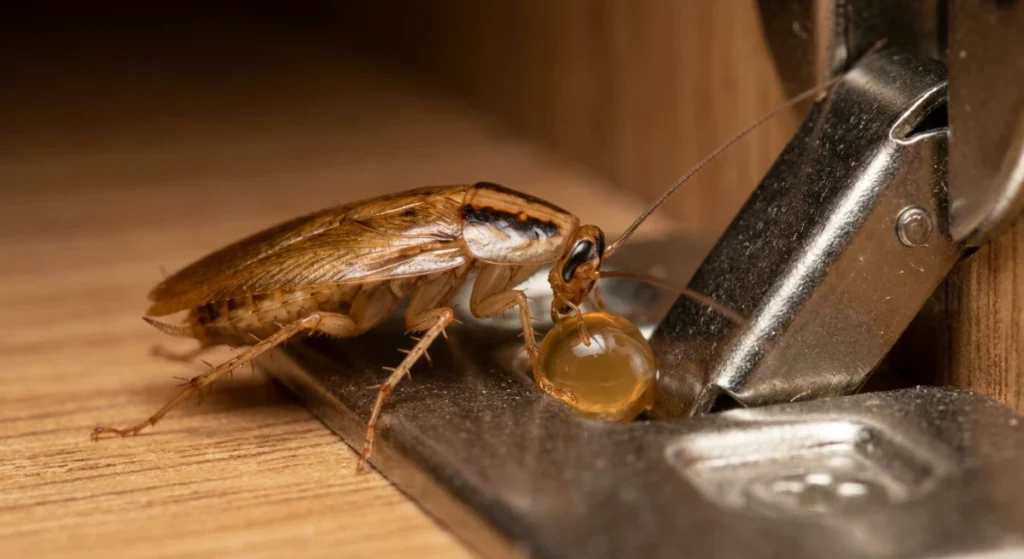
Running a commercial kitchen in Auckland right now is high stakes. With the New Zealand hospitality sector generating over $21.4 billion heading into 2026, the financial pressure on operators is immense. But as we hit this massive autumn pest surge, driven by a mild winter and a scorching summer, rats and mice are aggressively pushing into warm, food-rich environments.
You cannot just throw down a handful of toxic bait in a food prep zone and hope for the best. The Ministry for Primary Industries (MPI) will shut you down fast. The Food Act 2014 demands zero-tolerance hygiene, which means you must use non-toxic mechanical trapping in commercial kitchens.
It is not just about catching a rogue rat behind the deep fryer. It is about proving to a health auditor that your premises are actively monitored, structurally sound, and legally compliant. I have seen cafes lose their livelihoods because they tried to save a few bucks with hardware store gear. We do not mess around with your compliance.
Key Takeaways
Implementing non-toxic mechanical trapping for commercial kitchens is a strict legal requirement under the Food Act 2014. Toxic rodenticides are banned in food preparation zones. Operators must use tamper-proof mechanical traps, adhere to the Animal Welfare Act 1999 inspection rules, and maintain detailed digital logs for MPI audits.
Why Rodenticide Baits are Banned in Food Prep Areas
If you run a food business in Auckland, the rules are black and white. You cannot use toxic rodenticides in any area where food is prepared, processed, or stored unpacked. The risk of secondary contamination is simply too high.
Under the Food Act 2014, commercial kitchens operate on a sliding scale of risk. High-risk premises face intense scrutiny during verification audits. If an inspector finds a block of rat bait kicked under a prep bench, you will fail the audit instantly.
Rodents do not die immediately after eating toxic bait. They wander. A poisoned rat can easily crawl across your clean stainless steel benches, contaminating surfaces with highly toxic substances and pathogens before dying in a hard-to-reach wall cavity. That is why non-toxic mechanical trapping in commercial kitchens is the only legally compliant method for interior food zones.
Using Class 9 ecotoxic substances in a commercial kitchen without a Level 3 qualified Urban Pest Management contractor violates both the Food Act 2014 and the EPA HPC Notice 2017. Do not risk your business license.
Instead of relying on poisons, we focus on root-cause eradication. We identify exactly how the rodents are getting into your building and physically exclude them. Once the exterior is sealed, we use mechanical systems to clear out the interior population safely.
Types of Mechanical Traps for Hospitality
Not all traps are created equal. In a high-volume hospitality environment, you need equipment that is robust, hygienic, and safe for your staff to work around. We deploy specific systems based on the layout of your premises.
When we set up non-toxic mechanical trapping for commercial kitchens, we use commercial-grade stations. These are not the cheap wooden traps you buy at the supermarket. They are engineered for rapid, humane eradication and strict compliance.
Multi-Catch Live Traps (And Animal Welfare Act 1999 Rules)
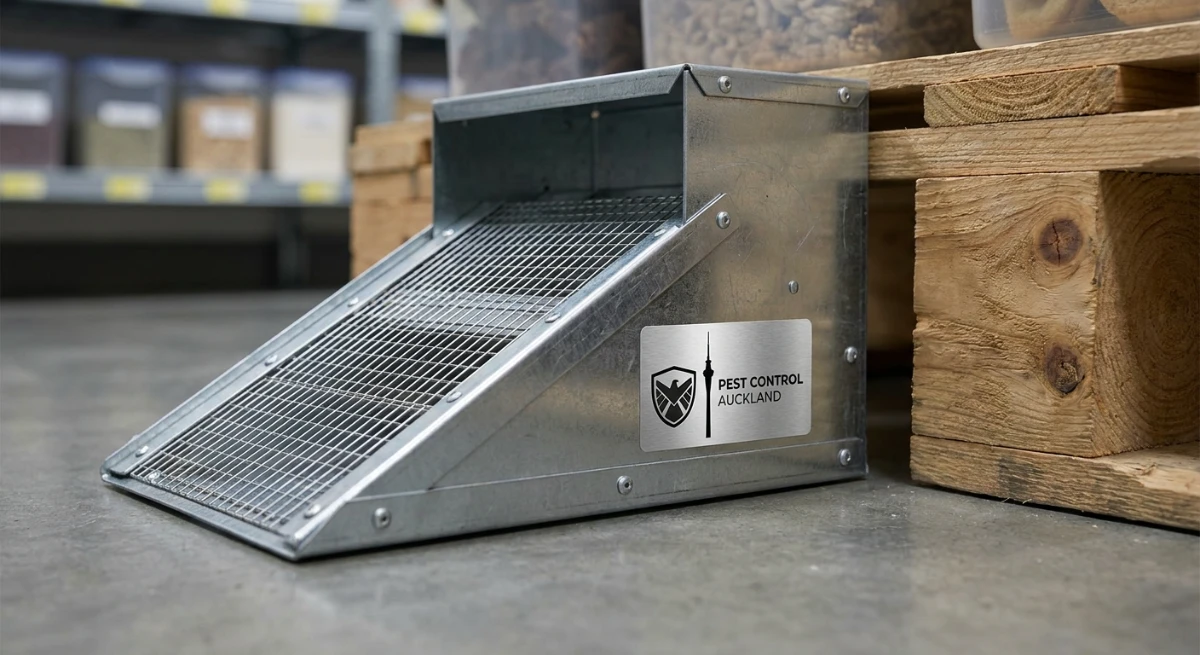
Multi-catch live traps are highly effective in dry storage areas and loading docks. These galvanized steel boxes can capture multiple mice at once without resetting. They use a one-way entry mechanism that relies on the rodent’s natural curiosity.
However, using live traps comes with strict legal obligations. Under Section 36 of the Animal Welfare Act 1999, any live-capture trap must be manually inspected within 12 hours after sunrise every single day it remains set. You cannot just leave it and forget it.
If you trap an animal and leave it to suffer from dehydration or stress, you are committing a prosecutable offense. This is why we often integrate remote monitoring sensors into our live traps, alerting you and our technicians the moment a capture occurs.
High-Impact Snap Traps in Tamper-Proof Stations
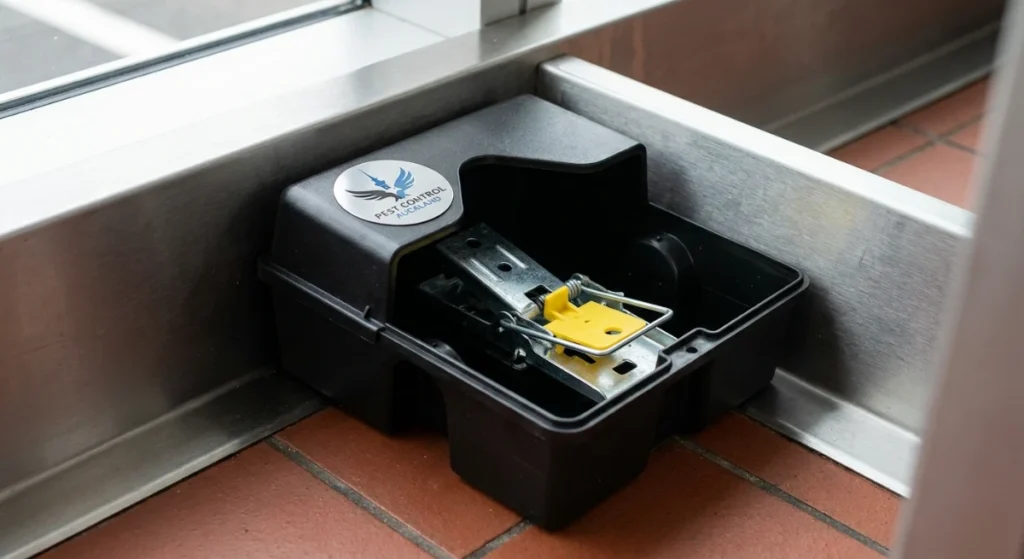
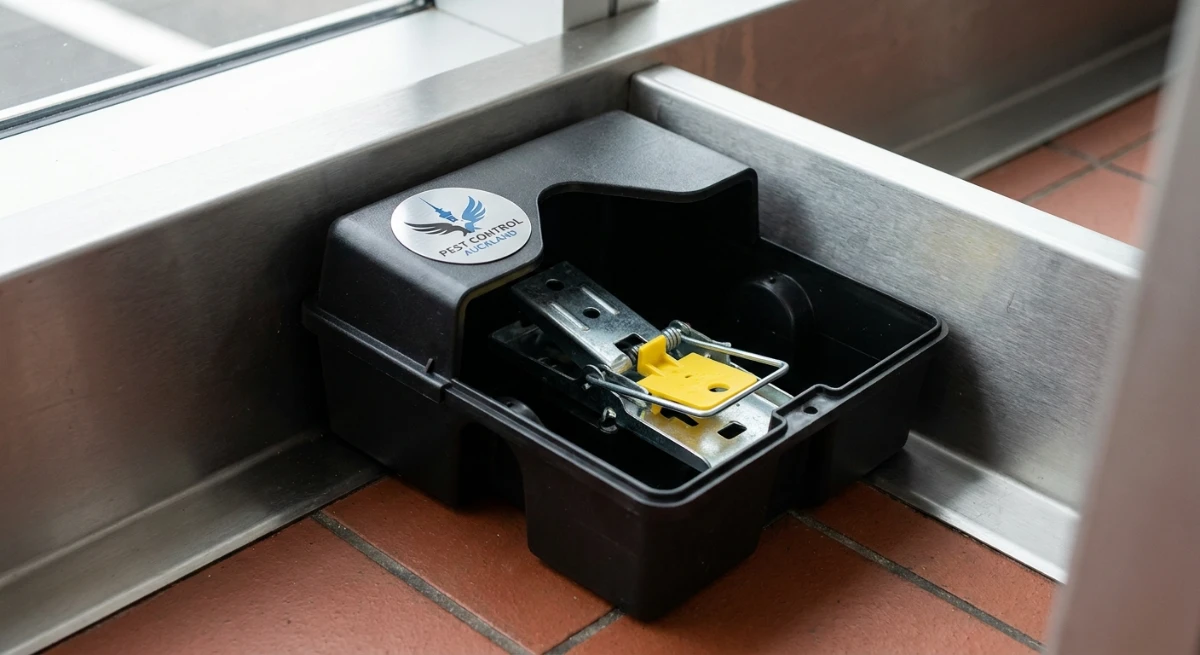
For immediate, humane eradication inside the kitchen, high-impact snap traps are the gold standard. We secure these traps inside lockable, tamper-proof plastic stations. This ensures they are completely isolated from food prep activities.
Placing the trap inside a station serves two purposes. First, it prevents staff from accidentally stepping on or triggering the trap. Second, rodents prefer enclosed, dark spaces. They feel safe entering the station, which drastically increases the catch rate.
Always map and number your tamper-proof stations. During an MPI audit, you must be able to prove exactly how many stations are on the floor and verify that none have gone missing or been swept under pallets.
The Illegality and Cruelty of Glue Boards in NZ
Every week, a restaurant owner asks me if they can just put down some sticky glue boards to catch a rat. The answer is a hard no. In New Zealand, rodent glue boards are strictly illegal.
Under the Animal Welfare (Glueboard Traps) Order 2009, selling or using these traps without a rare ministerial exemption is a criminal offense. They are indiscriminate and cause horrific, prolonged suffering to the animal.
Animals caught on glue boards often tear their own skin, break bones, or suffocate face-down in the adhesive. Furthermore, they frequently catch non-target species. As Auckland prepares to host the FAOPMA Pest Summit in July 2026, the global spotlight is on humane, ethical pest management. We do not use them, and neither should you.
Modern Integrated Pest Management (IPM) focuses on exclusion and humane eradication. Relying on illegal methods like glue boards not only risks massive fines but can destroy your brand’s reputation overnight if discovered by customers or staff.
Strategic Trap Placement for Maximum Efficacy
Having the right trap means nothing if you put it in the wrong place. Rodents are thigmotactic, meaning they rely on their whiskers and body contact with walls to navigate safely in the dark. They rarely run across the middle of an open kitchen floor.
We place our non-toxic mechanical trapping in commercial kitchens directly along their natural runways. This includes behind heavy cooking equipment, along skirting boards, and near identified structural entry points like poorly sealed pipe penetrations.
The autumn of 2026 has shown a massive spike in commercial pest activity. The data is clear: businesses that proactively place mechanical traps before the winter chill sets in are significantly less likely to face contamination events.
We also focus heavily on the transition zones. Loading docks, dry stores, and refuse areas are the primary highways for pests. By establishing a robust mechanical trapping perimeter in these areas, we stop the rodents before they ever reach the food prep zones.
Daily Inspection Protocols and Digital Logging
Installing the traps is only the first step. To satisfy the Food Act 2014 and maintain your HACCP compliance, you must have a rigorous inspection protocol. An unmonitored trap is a hygiene hazard in itself.
We provide complete digital logging for all non-toxic mechanical trapping for commercial kitchens. Every time a technician services your premises, a barcode on the trap station is scanned. This logs the date, time, activity level, and any corrective actions taken.
When the MPI auditor arrives, you do not need to scramble for a messy paper binder. You simply hand them the digital report. It proves beyond a doubt that your premises are professionally managed and highly secure.
Ensure all trap stations are numbered. Assign a staff member to visually check the exterior of the stations daily. Report any triggered traps or pest sightings to your Level 3 qualified technician immediately.
Here is a clear breakdown of how different pest control methods stack up in a commercial hospitality environment:
| Pest Control Method | Food Act 2014 Compliance | Animal Welfare Act Status | Best Use Case |
|---|---|---|---|
| Toxic Baiting (Exposed) | Strictly Banned in Prep Zones | Legal (with approved substances) | Exterior perimeter only |
| Glue Boards | N/A | Illegal in New Zealand | Never |
| Snap Traps in Tamper Stations | Fully Compliant | Legal (Humane Kill) | Interior kitchens, under benches |
| Multi-Catch Live Traps | Fully Compliant | Requires 12-hour sunrise checks | Dry stores, loading docks |
To ensure your commercial kitchen remains completely compliant and pest-free, we strongly recommend a proactive approach. Here is what a professional Integrated Pest Management (IPM) plan includes:
- Comprehensive structural audits to identify and seal all exterior entry points.
- Installation of lockable, tamper-proof mechanical stations in high-risk zones.
- Routine scheduled inspections by Level 3 qualified UPM technicians.
- Instant digital reporting and trend analysis for your MPI verification audits.
Do not wait for a health inspector to find a problem. By implementing a strict, non-toxic mechanical trapping strategy, you protect your customers, your staff, and your livelihood from the devastating impacts of a pest infestation.
Frequently Asked Questions

About the Author: Ronnie
Founder, Pest Control Auckland · Commercial & Residential Pest Expert · Certified Urban Pest Management Specialist
With years of experience handling high-stakes commercial biosecurity, Ronnie is the definitive expert on non-toxic mechanical trapping for commercial kitchens. Having consulted for Auckland’s top hospitality venues to ensure strict Food Act 2014 compliance, he specializes in designing zero-emission, audit-proof Integrated Pest Management systems.