I’ve spent years managing pest control for Auckland’s top hospitality venues. In a commercial kitchen, you cannot just spray toxic chemicals around food prep areas—the Food Act 2014 forbids it. So, when I walk into a family home and see a parent about to use a toxic hardware store bug bomb on the same floor their one-year-old crawls on, I have to step in.
You do not want to trade a pest problem for a poison problem. The same zero-emission, highly targeted methods we use to keep restaurants compliant are exactly what you need at home. When it comes to residual sprays vs. target baits: protecting crawling toddlers from chemical exposure is a non-negotiable priority.
The era of reactive, toxic “spray and pray” applications is dead. Today, we rely on scientific, root-cause eradication to keep your family safe. Let me tell you plainly what is going on, what works, and what happens next when you hire a certified professional.
Key Takeaways
When evaluating residual sprays vs. target baits: protecting crawling toddlers from chemical exposure comes down to application methods. Sprays leave widespread toxic residues on floors where infants play. Target baits use localized attractants securely placed out of reach, offering total eradication with near-zero risk of accidental contact.
The Reality of Toddlers and Pest Control
Toddlers experience the world through touch and taste. They drag their hands across the carpet, slap the skirting boards, and immediately put those fingers in their mouths. This natural behavior makes them incredibly vulnerable to surface chemicals.
Furthermore, infants have a higher respiratory rate than adults. They breathe faster and sit closer to the ground, meaning any airborne chemical residues settle right in their breathing zone. A chemical application that might be mildly irritating to an adult can be highly toxic to a small child.
According to the New Zealand National Poisons Centre, children under the age of five are at the highest risk for accidental poisoning. The vast majority of these incidents occur at home. This is why protecting crawling toddlers from chemical exposure must dictate the pest control methods you choose.
Hardware store bug bombs and aerosol foggers are among the worst offenders for indoor air quality. They coat every surface—including your child’s toys and highchair—in a toxic film without ever reaching the pests hiding inside your walls.
Residual Sprays: The Old “Spray and Pray” Method
For decades, the industry standard was to douse the perimeter of a room with a broad-spectrum chemical barrier. This is what we call a residual spray. The idea was simple: spray the skirting boards, and when a bug walks over it, it dies.
The problem is that this method relies on widespread chemical distribution. You are essentially turning your floor into a low-grade toxic zone. While these sprays eventually dry, the active ingredients remain on the surface for weeks or months to do their job.
If you have a toddler crawling over that exact same skirting board, they are picking up those active ingredients on their skin. We do not use this outdated approach for indoor residential environments anymore, especially not where children are present.
Target Baits: The Smart, Modern Approach
Target baits flip the script entirely. Instead of bringing the poison to the floor where your child plays, we make the pest come to the poison. We use the biology of the insect or rodent against it.
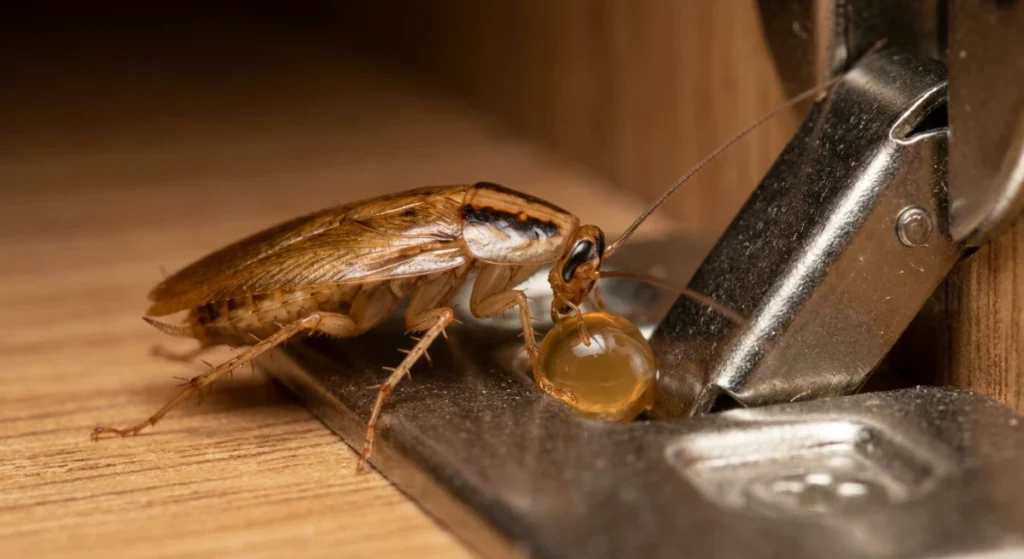
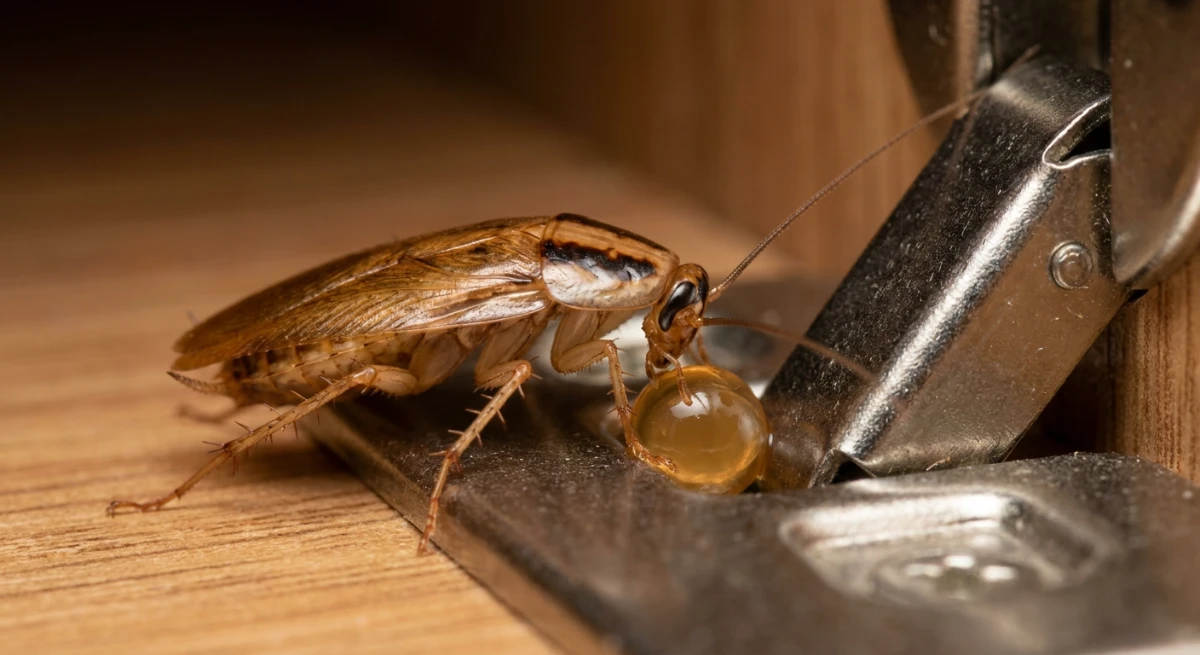
For ants and cockroaches, we use highly attractive gel baits applied in tiny, pin-sized dots. These are placed deep inside cabinet hinges, behind electrical faceplates, and under heavy appliances. A crawling toddler will never see them, let alone touch them.
The pests consume the bait and carry it back to the colony, creating a cascading eradication effect. This method destroys the nest at its root cause without aerosolizing a single drop of chemical into your home’s air.
Because we use enclosed target baits, you do not need to aggressively mop your floors or wash every dish in the house after we leave. Your home remains entirely yours, safe and undisturbed.
Direct Comparison: Sprays vs. Baits
Let’s look at the hard facts. When you compare the two methods side-by-side, it becomes obvious why the commercial hospitality sector abandoned broad-spectrum indoor sprays years ago. We bring that same zero-tolerance safety standard to your living room.
The goal is to eradicate the infestation completely while maintaining a pristine environment. Here is how the two approaches stack up against each other.
| Feature | Residual Sprays | Target Baits |
|---|---|---|
| Chemical Placement | Broadly applied to exposed floors and skirting boards. | Pinpoint application inside hidden cracks, crevices, and lockable stations. |
| Toddler Exposure Risk | High (Dermal contact and inhalation). | Near-Zero (Placed entirely out of reach). |
| Eradication Method | Kills only the individual pests that walk over the barrier. | Pests carry bait to the nest, destroying the entire colony. |
| Air Quality Impact | Aerosolizes chemicals into the home’s breathing zone. | Zero-emission; no airborne particles are released. |
Visualizing the Exposure Risk
The data is clear. When you map out the potential for accidental chemical contact, traditional methods pose a significantly higher risk to curious children. We rely on data-driven Integrated Pest Management (IPM) to push that risk down to zero.
Auckland’s Legal Landscape and HSNO Act
New Zealand does not mess around with hazardous substances, and neither do we. The Environmental Protection Authority (EPA) enforces strict rules under the Hazardous Substances and New Organisms (HSNO) Act 1996. This legislation dictates exactly how ecotoxic substances must be handled.
Under the EPA HPC Notice 2017, anyone handling Class 9 ecotoxic substances in an urban environment needs serious credentials. You cannot just buy commercial-grade chemicals and start spraying. We hold the New Zealand Certificate in Pest Operations (Level 3), ensuring full compliance with national safety laws.
This legal framework is designed to protect public health, especially vulnerable groups like children. By adhering to these strict regulations, we ensure that our treatments are legally sound, environmentally responsible, and fundamentally safe for your family.
Auckland is hosting the FAOPMA Pest Summit in July 2026. The theme is “FutureProof: Smarter Pest Solutions.” The entire global industry is actively shifting away from broad-spectrum sprays toward the exact predictive IPM methods we already use.
The Silver Bullet Guarantee for Families
We do not just spray and walk away. We practice Predictive Integrated Pest Management (IPM). This means we look for the root cause of your pest issue. If you have rats in the roof, we find the structural entry point and advise on exclusion.
Our “Silver Bullet Guarantee” is built on this exact premise. We solve the problem at its source using the safest, most effective methods available. We back our work because we know the science holds up.
When it comes to residual sprays vs. target baits: protecting crawling toddlers from chemical exposure is the foundation of our residential service. You get the peace of mind knowing your home is secure, your children are safe, and the pests are gone.
Landlords, Tenants, and the Auckland Autumn Surge
Auckland’s weather drives pest behavior. A mild winter followed by a hot summer always leads to a massive autumn surge in urban pests. Rodents and cockroaches push indoors seeking warmth and food.
This often causes friction between landlords and tenants over who is responsible for the pest control bill. Under the Residential Tenancies Act, landlords must provide a clean home, but tenants must keep it that way. Regardless of who pays, the treatment must be safe.
We provide transparent documentation that satisfies Tenancy Tribunal requirements. We outline exactly what target baits were used and where they were placed, proving that the property was treated with the highest regard for occupant safety.
Before letting anyone treat your home, ask to see their Level 3 Urban Pest Management certification. If they cannot produce it, do not let them apply chemicals around your children.
Why We Choose Baiting Over Spraying
The science of pest control has evolved. We understand the biological habits of the insects we are targeting. Cockroaches, for example, are thigmotactic—they like to be squeezed into tight cracks where sprays simply cannot reach.
By using gel baits, we place the solution exactly where the pests live. We use their natural foraging behavior to do the heavy lifting for us.
- Precision: Baits are applied in millimeter-sized drops.
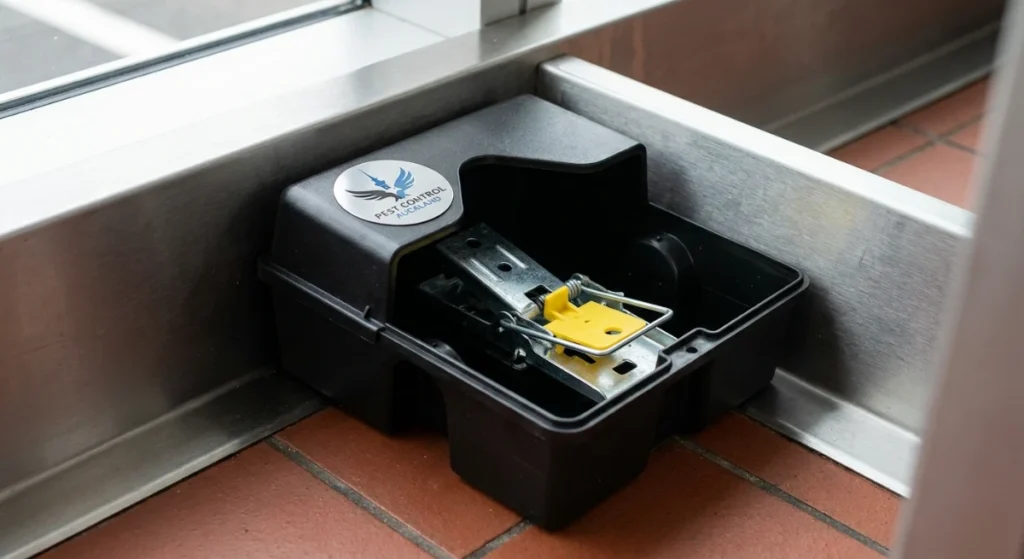
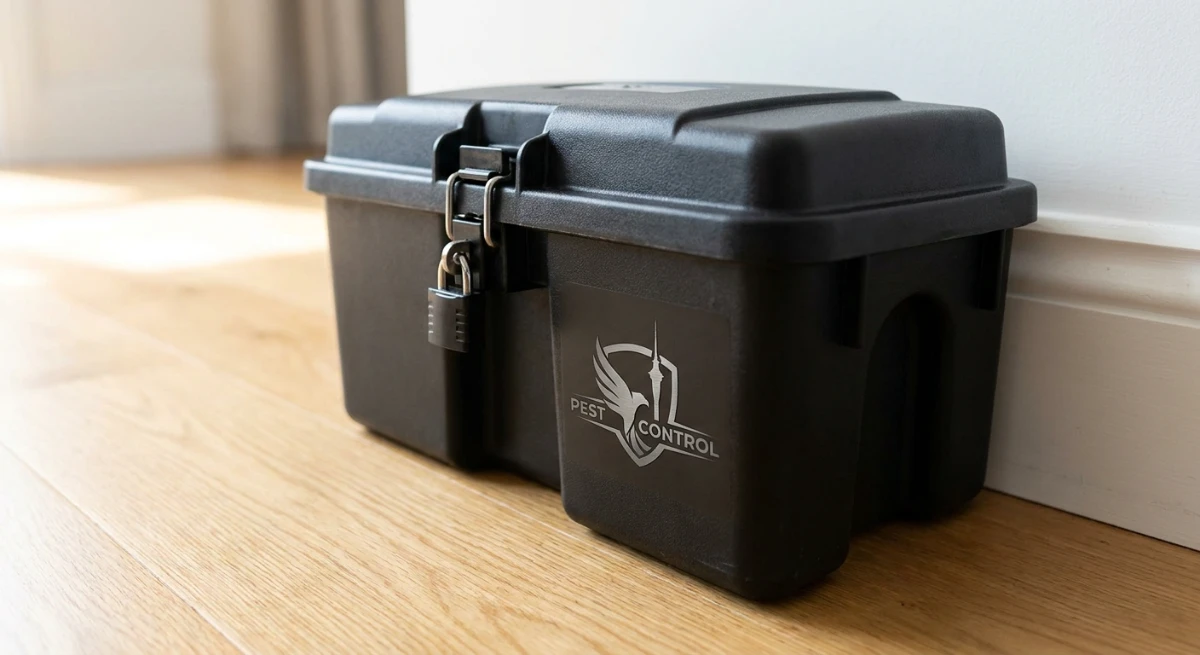
- Containment: Rodent baits are locked inside heavy-duty, tamper-proof stations.
- Longevity: Baits remain attractive and effective for months without contaminating the surrounding area.
- Safety: Zero risk of airborne inhalation for infants and pets.
This targeted methodology is why we can confidently walk into a childcare center, a commercial kitchen, or your family home and guarantee results without compromising safety.
Frequently Asked Questions

About the Author: Ronnie
Founder, Pest Control Auckland · Commercial & Residential Pest Expert · Certified Urban Pest Management Specialist
With years of experience managing high-stakes commercial hospitality environments under the Food Act 2014, Ronnie is the definitive expert on protecting crawling toddlers from chemical exposure. Having consulted for hundreds of Auckland families and holding a Level 3 Urban Pest Management certification, he understands exactly how to bridge commercial-grade hygiene with child-safe residential practices using advanced target baiting.