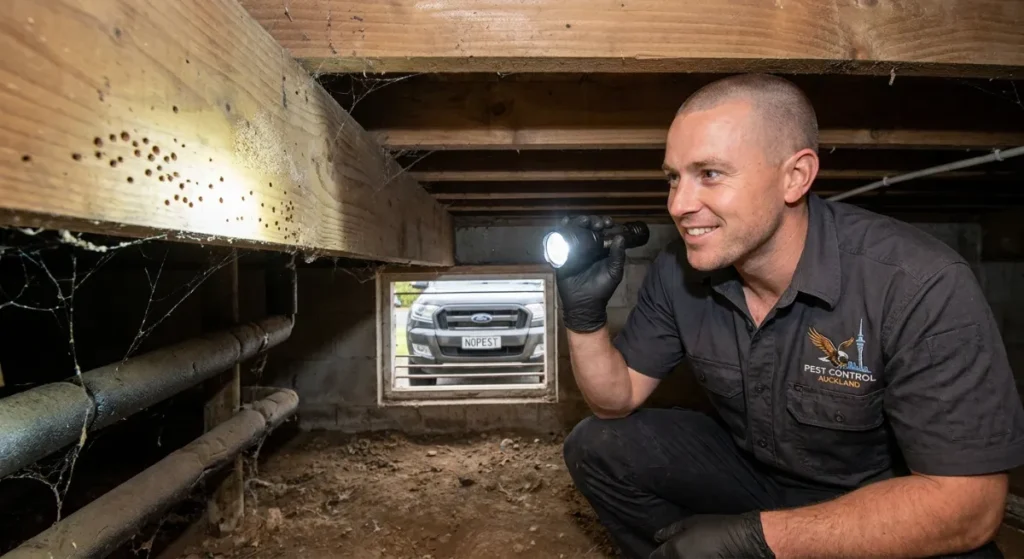
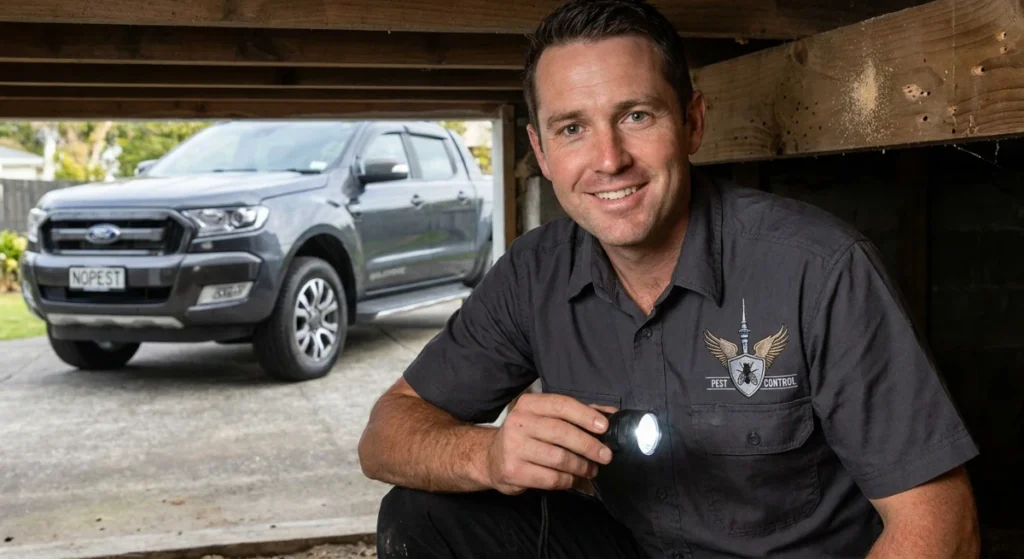
A borer inspection in Auckland is a critical pre-purchase assessment conducted by certified pest control experts to detect the presence of wood-boring beetles, specifically the Common House Borer and Two-toothed Longhorn. This inspection involves moisture analysis, sub-floor examination, and flight hole identification to determine if infestations are active or historic, protecting buyers from acquiring properties with compromised structural integrity.
Buying a home is likely the most significant financial investment you will make in your lifetime. In Auckland, where the housing stock is dominated by character villas, bungalows, and weatherboard homes constructed from untreated native timbers, the risk of insect infestation is substantially higher than in other regions. Knowing the Pre-Purchase Pest Red Flags for Auckland’s Heritage Villas and Bungalows is essential before making an offer. While most buyers prioritize a standard builder’s report, understanding Why Standard Auckland Building Inspections Often Miss Pest Infestations explains why overlooking a specialized borer inspection can lead to devastating financial consequences.
The humid, temperate climate of Auckland creates the perfect breeding ground for wood-boring insects. These pests do not merely live on the surface of the wood; they consume it from the inside out, often leaving the external face of the timber looking relatively intact while the core is reduced to dust. This guide serves as the definitive resource for navigating Pre-Purchase Pest Inspections, empowering you to make an informed decision before going unconditional.
Checking for Borer Before Buying a Home
When viewing an open home, it is easy to be distracted by freshly painted walls and staged furniture. However, a savvy buyer knows to look closer. While a professional inspection is non-negotiable, conducting your own preliminary checks can save you the cost of a report on a property that is clearly too far gone.
The most obvious sign of an infestation is the presence of flight holes. These are small, round exit holes, approximately 1-2mm in diameter, created when the adult beetle emerges from the timber to mate. In Auckland homes, these are most commonly found in untreated Rimu, Matai, and Kauri floorboards, as well as underfloor joists and bearers.

Visual Indicators of Activity
The presence of holes indicates that borer has been present at some point, but the critical question is whether the infestation is active. Look for “frass”—a fine, talcum-powder-like dust found below the holes or on cobwebs near the timber. Fresh, light-coloured frass suggests that larvae are currently chewing through the wood. If the holes are dark, clogged with paint, or grime, the infestation may be historic, though this is not a guarantee of safety without moisture readings.
The Sub-Floor Danger Zone
The most severe damage usually occurs where you cannot see it: the sub-floor. In Auckland, many older homes have inadequate ventilation in the crawl space, leading to high humidity. Damp timber is softer and more nutritious for borer larvae, accelerating their lifecycle. During a preliminary walk-through, ask the agent about the state of the underfloor insulation and ventilation. If the house smells musty or damp, assume the conditions are ripe for borer.
Identifying Auckland’s Common Timber Pests
Not all wood-boring insects pose the same level of threat. Understanding What is Borer Woodworm and which species is attacking the property is essential for determining the urgency and cost of treatment.
Common House Borer (Anobium punctatum)
This is the most widespread pest in New Zealand. They prefer sapwood of softwood timbers (like Radiata Pine) and the sapwood of native timbers. While they work slowly, an infestation left unchecked for decades can compromise the load-bearing capacity of floorboards and joists. Their flight season in Auckland typically runs from October to March.
Two-Toothed Longhorn (Ambeodontus tristis)
The Two-toothed Longhorn is significantly more destructive and harder to detect than the Common House Borer. They produce larger, oval-shaped holes and can infest heartwood, not just sapwood. Because they can remain inside the timber for up to 11 years before emerging, a piece of timber can look sound on the outside but be completely hollowed out internally. Discovering Longhorn borer often requires immediate and aggressive treatment, often involving timber replacement.
For more detailed scientific classification of these pests, you can refer to Wikipedia’s entry on Anobium punctatum, which details their lifecycle and biological habits.
Understanding the Inspection Report
Once you have commissioned a specialist borer inspection in Auckland, you will receive a detailed report. Interpreting this document correctly is vital. A high-quality report should differentiate between cosmetic damage and structural failure.
Active vs. Inactive Infestations
The report will categorize findings as active or inactive. “Inactive” means there is evidence of past attack, but no live larvae or fresh flight holes were detected. However, caution is advised; if the timber has been recently painted or cleaned, signs of activity might be masked. “Active” confirms the presence of live larvae, necessitating treatment.
Moisture Content Readings
Professional inspectors use moisture meters to test the timber. Wood with a moisture content of over 15-18% is highly susceptible to re-infestation. If the report highlights high moisture readings in the sub-floor, simply spraying for borer will be a temporary fix. You must address the drainage and ventilation issues to lower the moisture content, or the borer will return.
Comprehensive Treatment Options and Methodology
If the inspection reveals an active infestation, the report should outline a treatment plan. In the context of Auckland pest control, there are generally three tiers of intervention.
1. Residual Surface Spraying
This is the most common treatment for Common House Borer. A technician sprays a residual insecticide (often Boron-based or synthetic pyrethroids) onto all exposed timber surfaces, particularly in the sub-floor and roof void. This does not kill the larvae deep inside the wood immediately. Instead, it breaks the lifecycle: as adults emerge to mate, they contact the treated surface and die, preventing them from laying new eggs. This process requires patience, as it can take several flight seasons to fully eradicate the population.
2. Timber Injection
For flight holes found in painted or varnished internal timbers (like door frames or polished floors), surface spray is ineffective because it cannot penetrate the coating. Professionals will use a syringe or specialized nozzle to inject insecticide directly into the flight holes. This targets the labyrinth of tunnels inside.
3. Gas Fumigation (Tent Fumigation)
In extreme cases, particularly with severe Two-toothed Longhorn infestations or widespread termite activity (though less common in NZ), the entire house may need to be tented and fumigated with gas. This is a highly expensive and disruptive process, usually reserved for properties where standard treatments have failed or the infestation is total.

Estimating Repair and Treatment Costs
Financial planning is crucial when borer is detected. The costs can vary wildly depending on the size of the Auckland home and the severity of the attack.
Treatment Costs
For a standard 3-bedroom bungalow in Auckland, a full Borer Treatment Auckland service involving a residual spray treatment of the sub-floor and roof cavity typically ranges between $800 and $1,500 NZD. This price fluctuates based on access difficulty (e.g., very low crawl spaces require more labor) and the type of chemical used. Many reputable companies offer a warranty of 5 to 10 years on this treatment.
Structural Repair Costs
This is where costs can skyrocket. If a bearer or joist has lost its structural integrity, it cannot simply be sprayed; it must be replaced or “sistered” (bolting a new timber alongside the damaged one). Replacing sub-floor timbers can cost anywhere from $500 to over $10,000 NZD depending on how much flooring needs to be lifted to gain access. If the borer has attacked the roof framing, costs can be even higher due to the complexity of supporting the roof load during repairs.
Negotiating Based on Pest Findings
Finding borer does not necessarily mean you should walk away from the property. Instead, use the inspection report as a powerful leverage tool during negotiations.
The “Pest Clause” Strategy
When making an offer on an older Auckland home, always insert a condition subject to a satisfactory pest inspection. If the report comes back showing active borer, you have three primary options:
- Request Remediation: Ask the vendor to pay for a professional treatment by a certified company before settlement. Ensure the warranty is transferable to you.
- Price Reduction: Obtain quotes for the treatment and any necessary structural repairs, then reduce your offer by that amount. This is often the preferred method, as it gives you control over the quality of the contractor chosen.
- Retention: Have the lawyers hold back a portion of the settlement funds to cover the repairs, with the balance released once the work is certified complete.
It is reasonable to expect a house built in the 1920s to have some historic borer damage. However, you should not be paying a premium price for a property that requires thousands of dollars in immediate pest control and carpentry. For further guidance on consumer rights and building standards, resources like Building Performance NZ provide excellent context on maintaining timber structures.
Selecting a Qualified Inspector
Not all pest controllers are created equal. In New Zealand, the barrier to entry can be low, so due diligence is required when hiring an inspector.
When searching for the Best Borer Treatment Auckland, look for a provider who is a registered member of the Pest Management Association of New Zealand (PMANZ). Membership ensures they adhere to a code of practice, carry liability insurance, and engage in continuing professional development. Furthermore, ensure the inspector has specific experience with Auckland’s housing stock. An inspector who primarily works in newer suburbs may not have the nuanced eye required to spot early signs of Two-toothed Longhorn in a 100-year-old villa.
Ultimately, a pre-purchase borer inspection is a small price to pay for peace of mind. By identifying issues early, understanding the scope of the damage, and negotiating effectively, you can secure your new home without inheriting a structural nightmare.
People Also Ask
How much does a borer inspection cost in Auckland?
A standalone borer inspection in Auckland typically costs between $250 and $450 NZD. However, it is often bundled with a full pre-purchase building inspection, which can range from $800 to $1,200 NZD depending on the property size and complexity.
Can you sell a house with borer in New Zealand?
Yes, you can sell a house with borer, but you must not mislead buyers. If you are aware of an infestation, you should disclose it. Most buyers will commission a report, so it is often better to treat the issue beforehand or be prepared to negotiate on price.
How do I know if borer is active?
Active borer is indicated by clean, fresh flight holes and the presence of “frass” (fine, light-coloured sawdust) beneath the holes. If the holes are dark, grey, or painted over, the infestation may be historic, but professional moisture testing is needed to be sure.
Does house insurance cover borer damage?
Generally, no. Most standard home insurance policies in New Zealand classify borer and insect damage as “gradual damage” or maintenance issues, which are excluded from cover. This makes pre-purchase inspections even more vital.
How long does borer treatment last?
A professional residual spray treatment usually remains effective for 5 to 10 years, provided the sub-floor environment remains dry. Most reputable Auckland pest control companies offer a warranty period (commonly 5 years) on their work.
Is borer common in Auckland homes?
Yes, borer is extremely common in Auckland, particularly in homes built before the 1960s using untreated native timbers like Rimu and Matai. The region’s high humidity levels create ideal conditions for borer larvae to thrive.